







Solutions

Vehicle Thermal Management

Optimize vehicle thermal systems using GT-SUITE's multi-fluid solvers to predict pressure drop, flow distribution and performance straight from CAD geometry.

Solution Overview

Optimize Thermal Systems

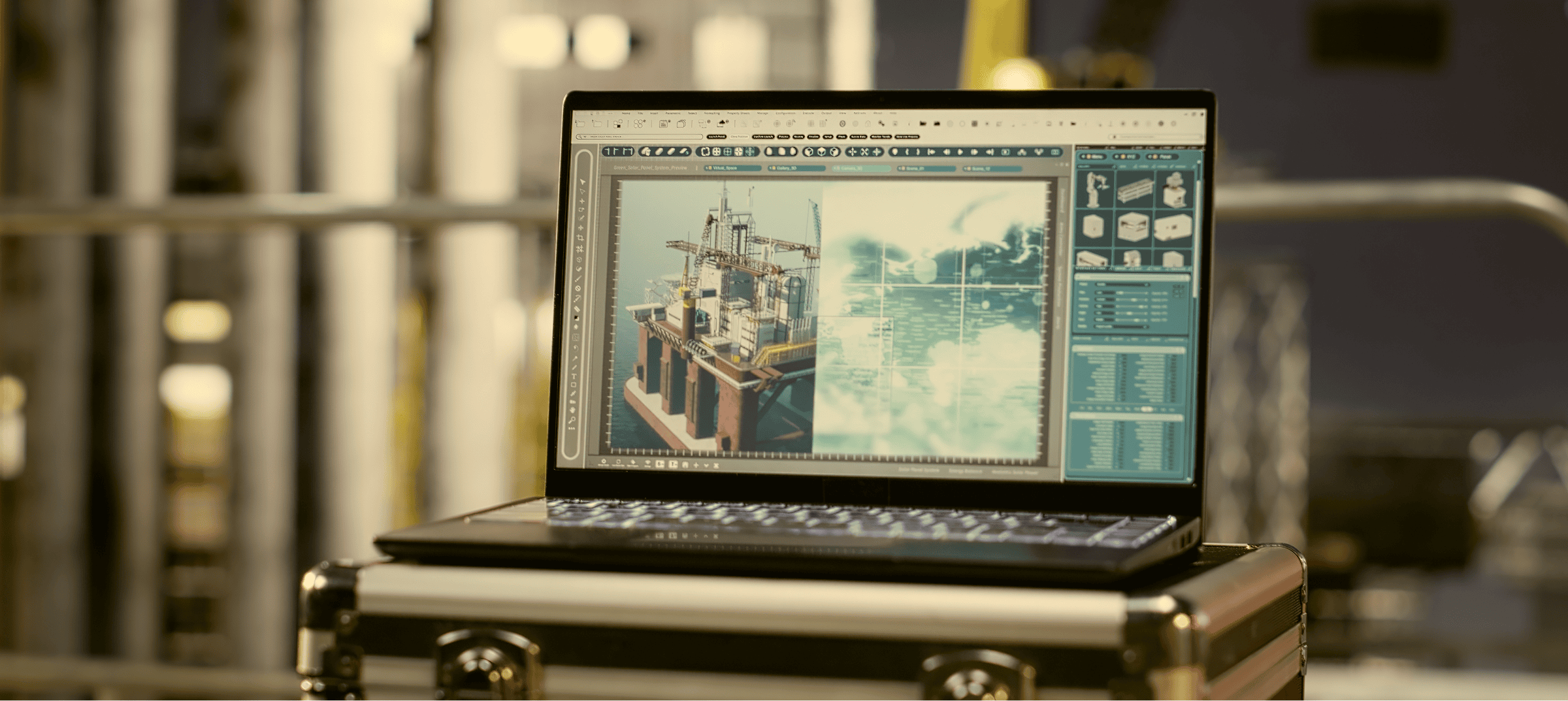
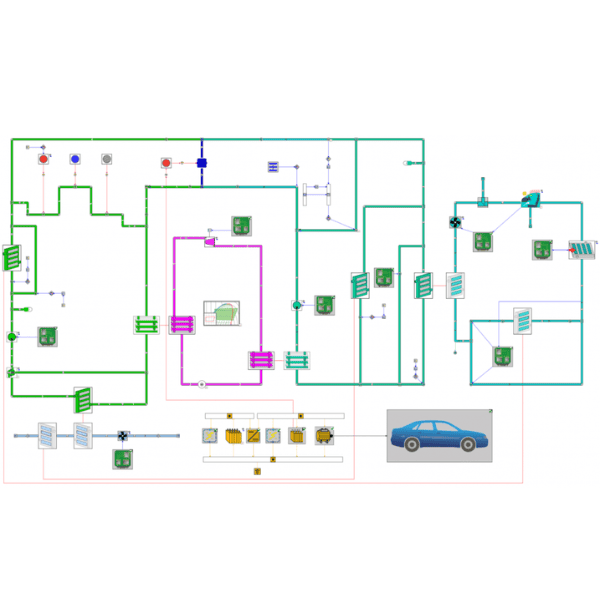
GT-SUITE is an industry-leading thermal management tool used to analyze pressure drop, flow distribution, and performance. Its robust and powerful solvers easily handle all fluid types, including coolants and refrigerants, in a single model. Powerful 3D tools enable rapid creation of 1D flow networks and underhood airflow directly from CAD geometry.

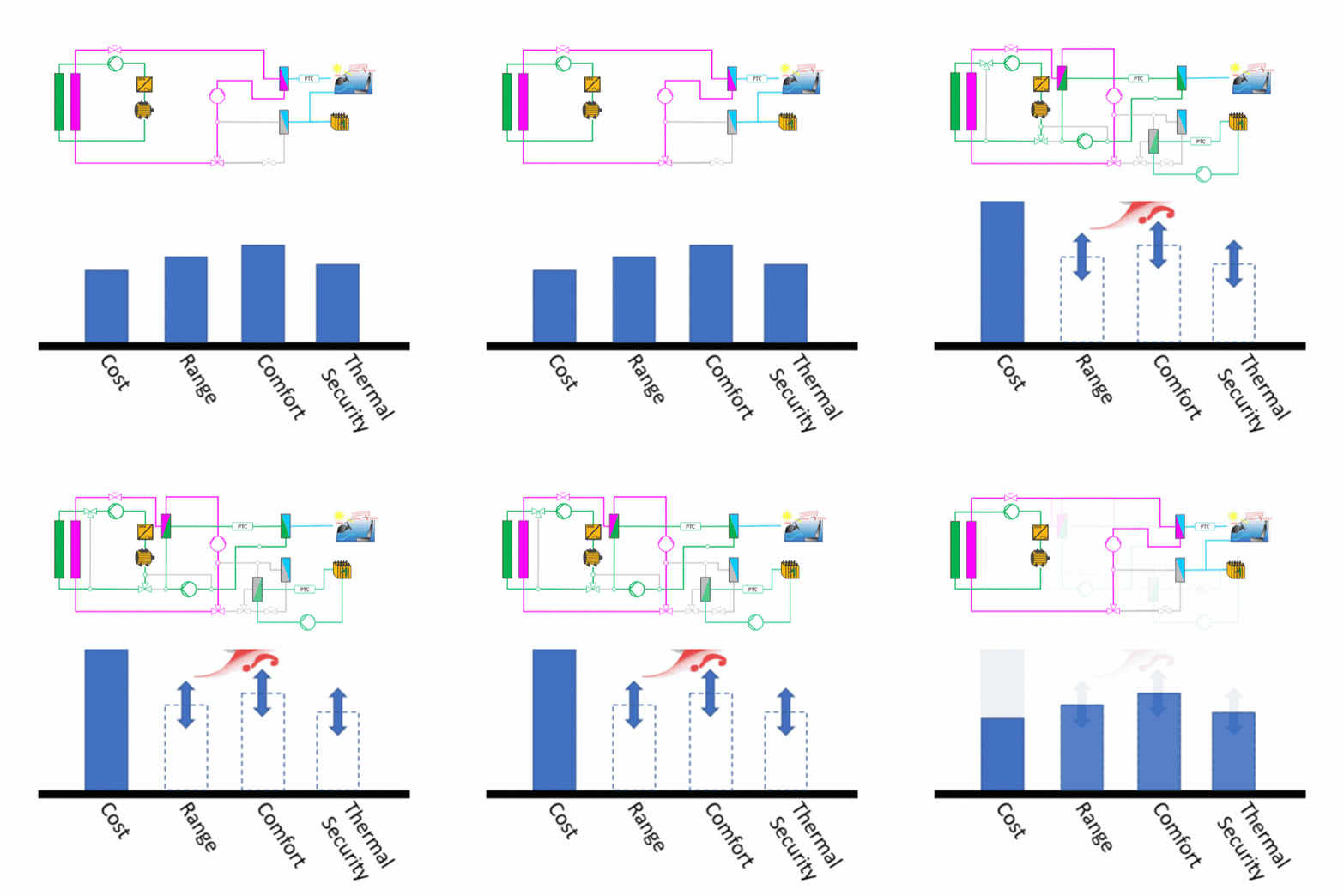
Thermal management models can be easily integrated with the vehicle and powertrain to optimize energy management.

Untitled-600-x-600-px-8

Application Highlights

Faster Thermal Modeling, Built for Accuracy

  • Robust transient thermal fluid solver, even for zero flow
  • Integrate single and two-phase circuits, including coolant, refrigerantcabin, and more
  • Automatic fitting of component (e.g. heat exchanger, pump, compressor, valve, etc.) performance data 
  • Semi-automatic creation 1D flow network from CAD with GEM3D 
  • Advanced, internally developed pipe pressure drop models provide high accuracy with the speed of 1D 
  • Predict effects of non-uniform airflow and heat exchanger stacking 
Untitled-600-x-600-px-58

Advanced Modeling Capabilities

Build detailed thermal system models quickly and accurately using advanced simulation capabilities.

service-icon-1

Complete System Integration for Smarter Energy Decisions

GT-SUITE connects your thermal management model directly with vehicle, powertrain, and electrical systems, giving you a full-system view to evaluate energy tradeoffs and optimize efficiency across every operating condition.


service-icon-1

One Model. The Entire Development Journey

Build your thermal model once and carry it from early design through controls development and real-world validation. It supports MiL, SiL, and HiL environments without rebuilding, so all teams work from one consistent model.

service-icon-1

High-Fidelity Results at System-Level Speed

Lumped thermal mass and finite element component models linked to 1D flow solvers deliver accurate temperature and pressure results at the speed needed for full drive-cycle and long-transient simulations, without sacrificing physical detail.

service-icon-1

Find the Right Component Faster

Evaluate pumps, heat exchangers, valves, and other components across design variations using integrated Design of Experiments tools. Swap components between cases without rebuilding your model and reach confident, data-driven decisions earlier in the program.

service-icon-1

Real-World Performance Across Full Drive Cycles

Simulate complete transient drive cycles, including cold starts, thermal soak, and aggressive loads, under real-world conditions. The transient solver handles all fluid types, including coolants and refrigerants, in one model.

service-icon-1

Heat Exchanger Design from Geometry to System Impact

Evaluate how heat exchanger geometry, sizing, and stacking affect system-level thermal performance, and predict airflow effects to make confident design decisions earlier in development.

Vehicle Thermal Management FAQs

Find answers to common questions about vehicle thermal management simulation

  • Can GT-SUITE handle both single-phase and two-phase thermal circuits in the same model?

    Yes. The thermal fluid solver integrates single and two-phase circuits, including coolant, refrigerant, cabin, and HVAC systems, all within one model environment. That means engineers don’t need to juggle separate tools for different fluid domains, and can instead get a complete, system-level view of thermal behavior from a single consistent model.

  • How early in the development process can we start building a vehicle thermal management model?

    Right from the earliest design stages. Tools like GEM3D make it possible to semi-automatically generate 1D flow networks directly from CAD geometry, so you’re not starting from scratch just to get a working model. And the payoff compounds over time: models built during design don’t get discarded later. They carry forward into controls development and validation across MiL, SiL, and HiL environments, so early investment in simulation keeps paying off throughout the program.

  • Can the same thermal model be used for controls validation, or do we need to rebuild it for XiL testing?

    No rebuild needed. Models developed for design and system analysis carry over directly into controls development and XiL validation. That continuity cuts down on redundant engineering work, and it means the controls team is validating against the exact same physics based model used earlier in system design, not a simplified stand in.

  • How does GT-SUITE support thermal management for electric and hybrid vehicles specifically?

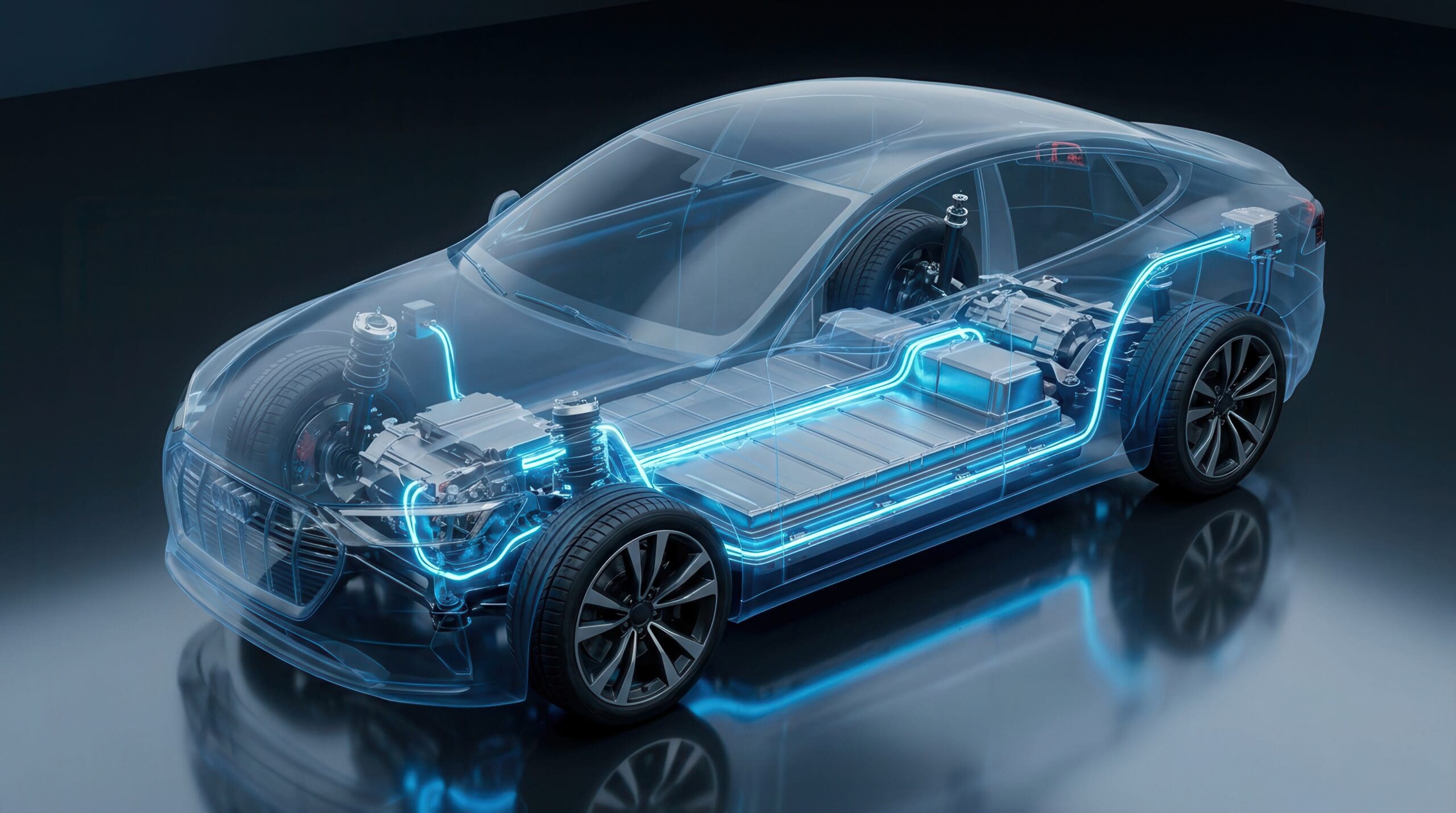
    It’s a well established platform in EV and hybrid thermal development, with published applications spanning battery pack thermal management, e-drive cooling, power electronics thermal management, heat pump systems, and full vehicle energy management. Because all of these subsystems connect within a single vehicle-level model, engineers can evaluate thermal interactions and energy tradeoffs across the entire powertrain, which is increasingly critical as thermal loads and efficiency targets tighten in electrified architectures.

Connect with an Expert

Ready to discuss how our 1D System Simulation services can help your project? Fill out the form below and our team will get back to you within 1 business day.

Questions before you submit?

Email us at services@gammatech.com

By submitting this form, you agree to be contacted by GammaTech regarding our 1D System Simulation services. We respect your privacy and will not share your information with third parties. See our Privacy Policy for more details.