






Multi-Domain Hydraulic Integration
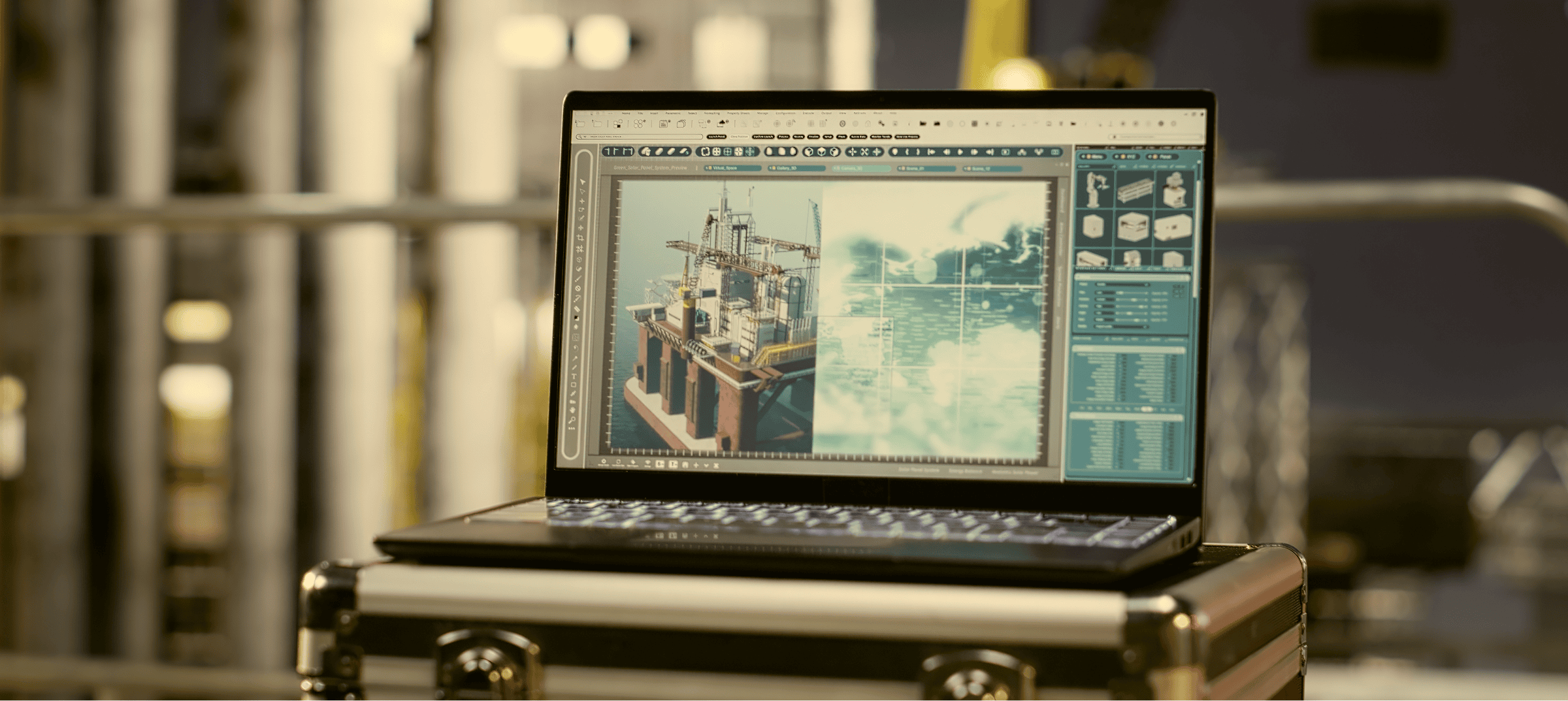
Integrate hydraulics with 1D, 2D, or 3D rigid or flexible body mechanics.
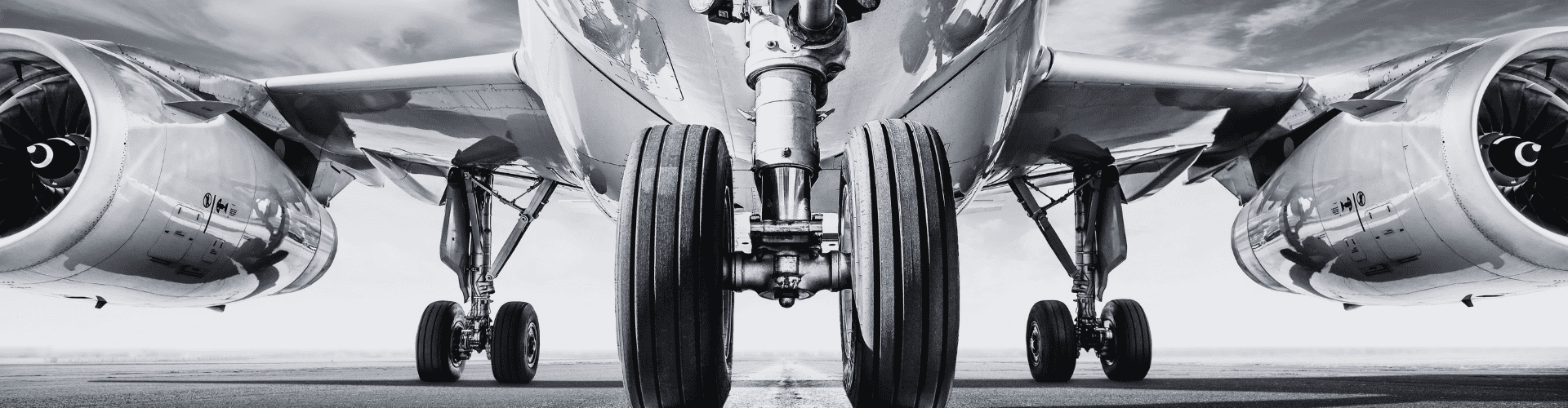
Design, analyze, and optimize aircraft landing gear systems within GT-SUITE
Solution Overview
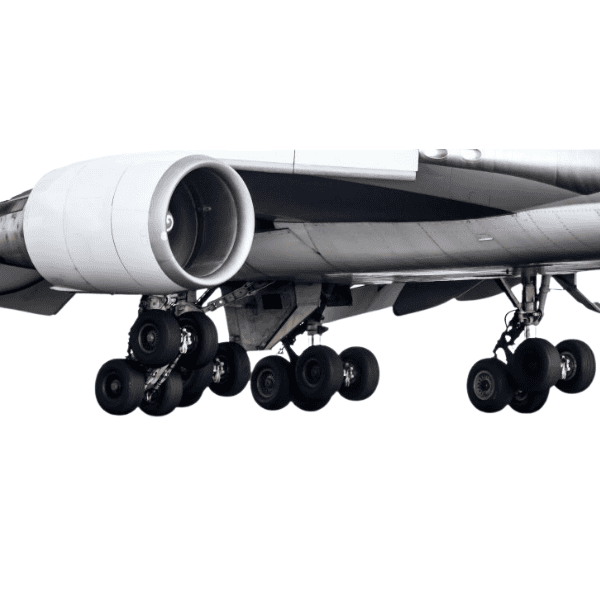
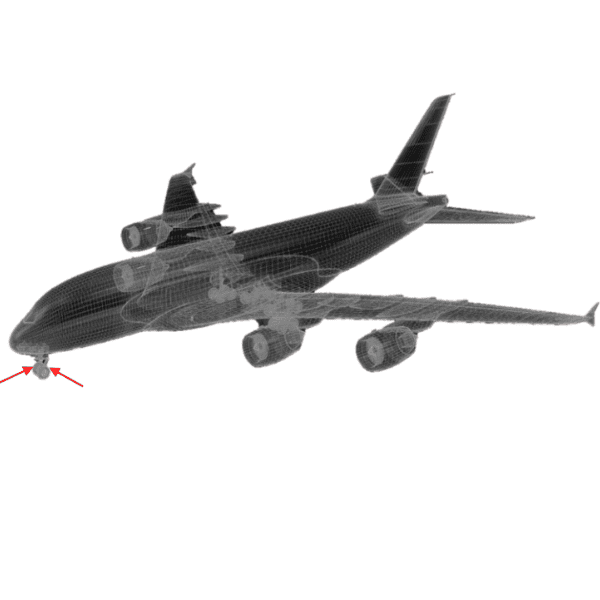
Models can be used to study performance of the landing gear, retraction, extension, steering, and braking.
GT-SUITE’s comprehensive library of templates empowers users to quickly create complete landing gear system or component level models. Within system level models, fidelity of components (pumps, valves, linkages, etc.) can be easily interchanged. Advanced thermal hydraulic models integrated with multi-body mechanics enable studies of component sizing as well as high frequency behavior such as water hammer effects.
Application Highlights
Advanced Features
Model and analyze landing gear performance, hydraulics, and system dynamics.
Integrate hydraulics with 1D, 2D, or 3D rigid or flexible body mechanics.
Integrate electrical actuators, sensors, and control logic directly into the landing gear model to simulate closed-loop system behavior alongside hydraulics and mechanics.
Built-in DOE and optimization from component-level to complete systems.
Capture thermal effects within the hydraulic circuit, including heat generation from hydraulic losses and water hammer events, to support component sizing and system-level thermal performance analysis.
Simulate high-frequency hydraulic phenomena including water hammer, cavitation, aeration, and compressible liquid behavior to accurately predict transient loads and pressure surges across the landing gear system.
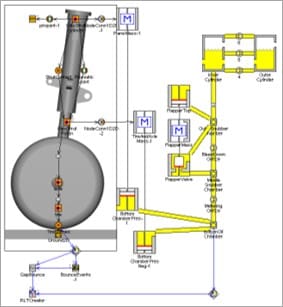
Develop and integrate hydraulic actuation, multi-body mechanics, oleo strut design, actuators, detailed pump dynamics, and braking within a single simulation environment, eliminating the need for multiple disconnected tools.
Find answers to common questions about using GT-SUITE for landing gear simulation.
Landing gear modeling in GT-SUITE spans the full system: hydraulic actuation for extension and retraction, oleo strut dynamics, steering mechanisms, braking systems, actuators, detailed pump behavior, and FPMU (Flight Power and Motion Unit) components.
Hydraulics and mechanical dynamics are coupled directly in GT-SUITE, combining 1D, 2D, or 3D rigid and flexible body mechanics in one environment. This lets engineers analyze fluid behavior and mechanical response together, rather than stitching results from separate tools.
High frequency hydraulic behavior, including water hammer, compressible liquids, cavitation, aeration, and gas transport, is captured through a fully transient Navier-Stokes solver built into the platform. This gives engineers the transient fidelity needed to evaluate fast acting landing gear hydraulic events, not just steady state flow.
The workflow starts with CAD: 3D geometry can be converted automatically into a 1D flow system model, cutting down manual setup time. From there, electrical and control components can be layered into the same model, and built in DOE and optimization tools carry the analysis from individual component sizing all the way to full system performance tuning.