






Diagnostic Visualization
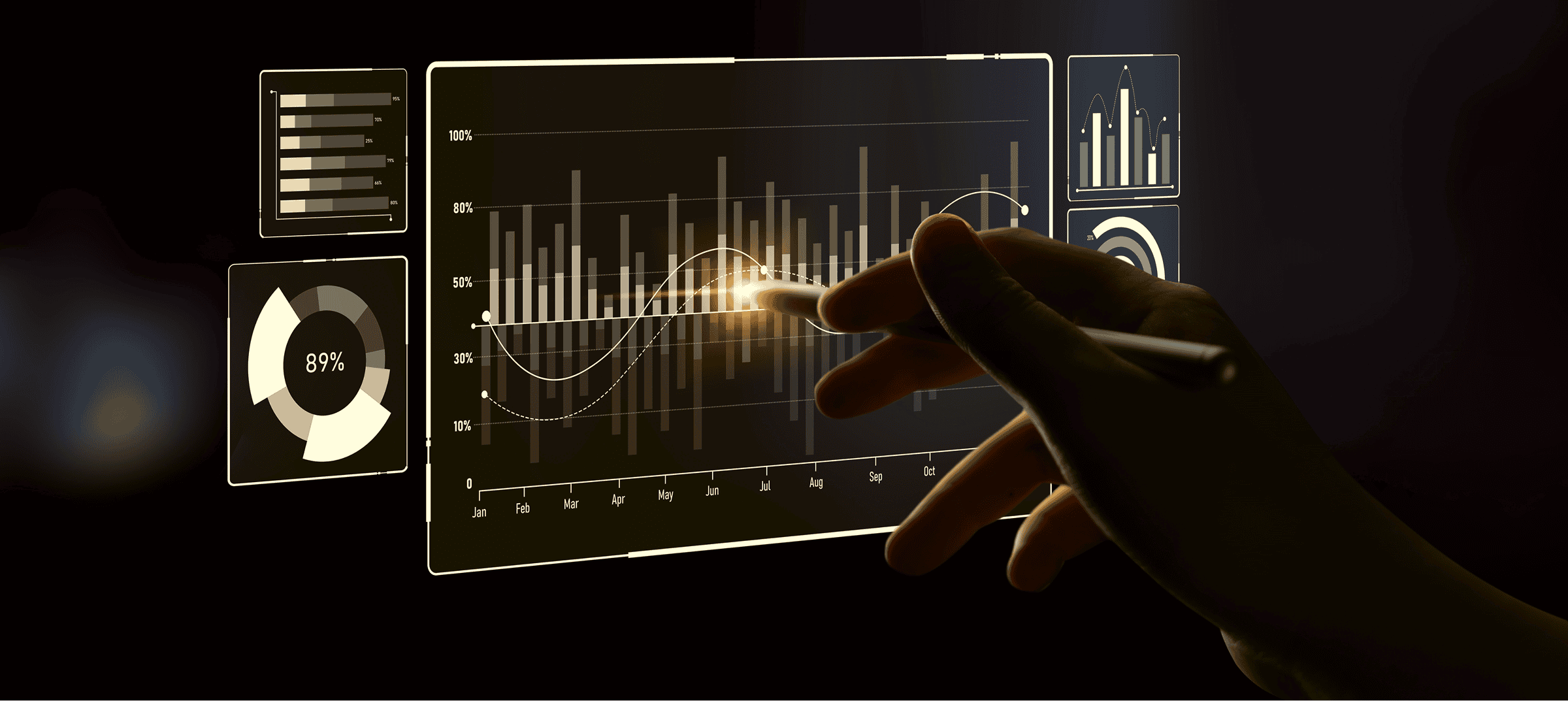
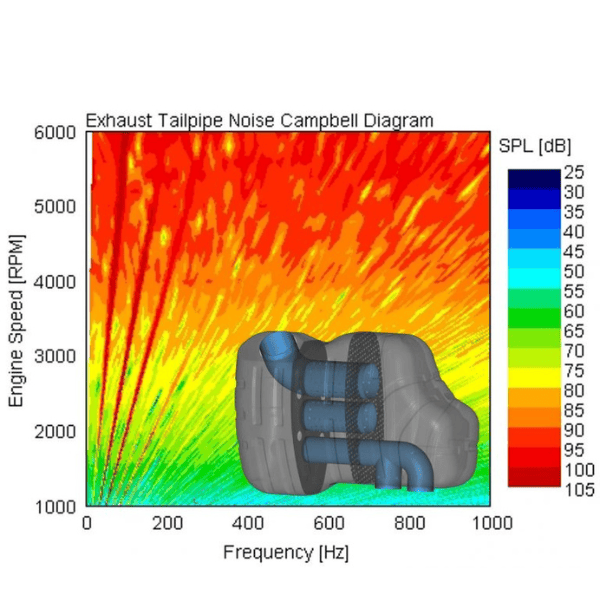
Visualize acoustic behavior through Campbell diagrams, frequency and order waterfall plots, and order cuts for detailed noise diagnosis.
Predict noise levels and frequency content with GT-POWER's Navier-Stokes solver, from complex mufflers to air boxes.
Solution Overview
GT-POWER’s advanced Navier-Stokes based solver intrinsically captures pressure wave dynamics within the simulated intake and exhaust system, predicting both the noise levels and frequency content radiated from the exhaust tailpipe and intake snorkel.
Advanced 3D pre-processing through GEM3D enables fast, reliable creation and meshing of complex geometries, including stamped shell mufflers, molded airboxes, and irregular plenums, supporting acoustic performance validation earlier in the development process and reducing reliance on physical prototypes.
Application Highlights
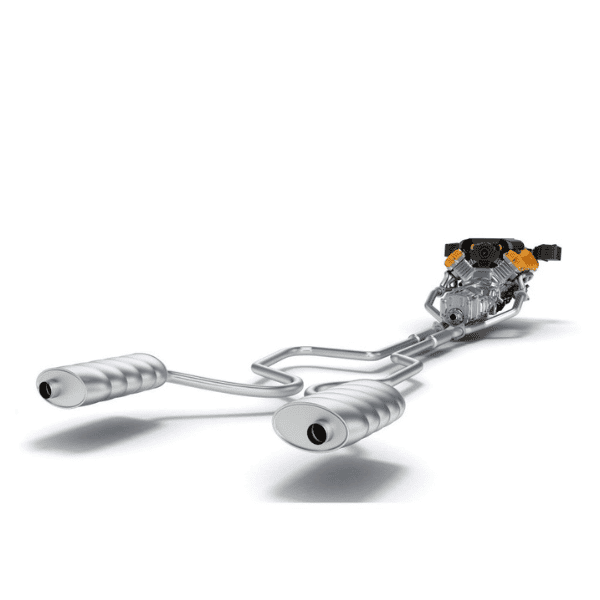
Advanced Features
Explore the advanced capabilities that give engineers full visibility into acoustic performance before physical prototyping.
Visualize acoustic behavior through Campbell diagrams, frequency and order waterfall plots, and order cuts for detailed noise diagnosis.
Generate predicted audio output to assess sound quality directly, hearing simulated results before physical testing.
Simulate real-world acoustic scenarios, including pass-by noise, engine run-up, and vehicle drive-away events.
Parameterize muffler component properties, such as baffle location and perforate design, for automated optimization.
Predict flow-generated noise accurately using the industry-validated Green and Smith flow noise model.
Run steady-state or transient analysis to match your development stage, from quick concept screening to detailed transient acoustic behavior.
Answers to common engineering questions on modeling intake and exhaust acoustics in GT-POWER — from solver technology to optimization workflows.
Pressure wave dynamics are captured as a natural part of the simulation, with no separate acoustic solver needed. Both noise level and frequency content at the exhaust tailpipe or intake snorkel come from the same model used for performance analysis. A linearized Transfer Matrix solver is also available for faster early-stage work.
Transmission loss, insertion loss, transfer functions, and free-field sound pressure levels are all covered. Results can be viewed as Campbell diagrams, waterfall plots, or order cuts, and audio files can even be generated to listen to predicted sound quality. Steady-state and transient scenarios are both supported, including pass-by noise, run-ups, and drive-away events.
GEM3D handles the geometry side, letting engineers import CAD files, repair models, and mesh components like stamped shell mufflers, molded airboxes, perforated pipes, and baffles. Meshing runs in Cartesian 3D, capturing 3D acoustic effects while keeping run times close to 1D system simulation. Sound absorbing materials like Advantex and rock wool are supported too.
Component properties like baffle position, perforate geometry, and material can be parameterized and fed into GT-SUITE’s built-in optimizers or third-party tools. The full workflow, including meshing, can run in batch mode to screen large design spaces without manual intervention. Transfer Matrix analysis also works as a lightweight pre-process using just geometry and boundary conditions, keeping early-stage evaluation fast.