






PEMFC, SOFC & Electrolysis Solutions
Solutions for PEMFC, SOFC, and Electrolysis.
GT-SUITE is the ideal platform for the analysis and optimization of fuel cell systems and their components
Solution Overview
Combining industry leading productivity tools and collaboration features with advanced multi-physics modeling capabilities, GT-SUITE can be used throughout the entire product development process.
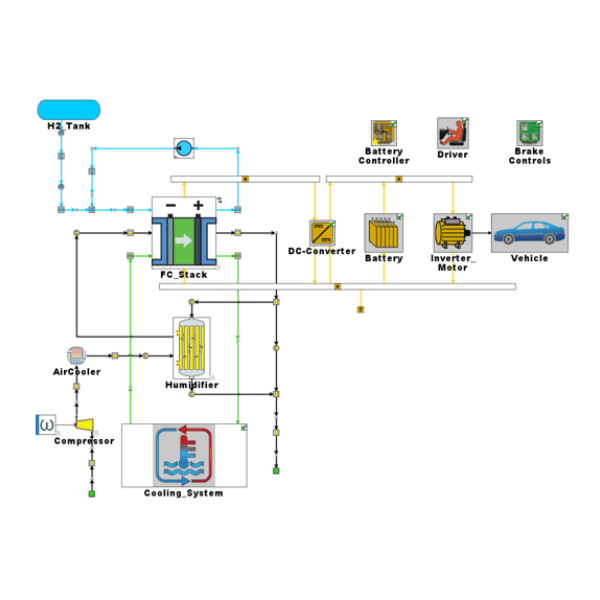
GT-SUITE integrates flow, thermal, chemical, and electrical solutions to enable complete modeling of the Balance of Plant and Vehicle Systems, such as air compression and humidification, hydrogen storage and recirculation, cooling systems, power management controls, and more.
The flexible range of fidelity provides an ideal simulation environment for system design, component selection, and controls optimization.
Application Highlights
Advanced Features
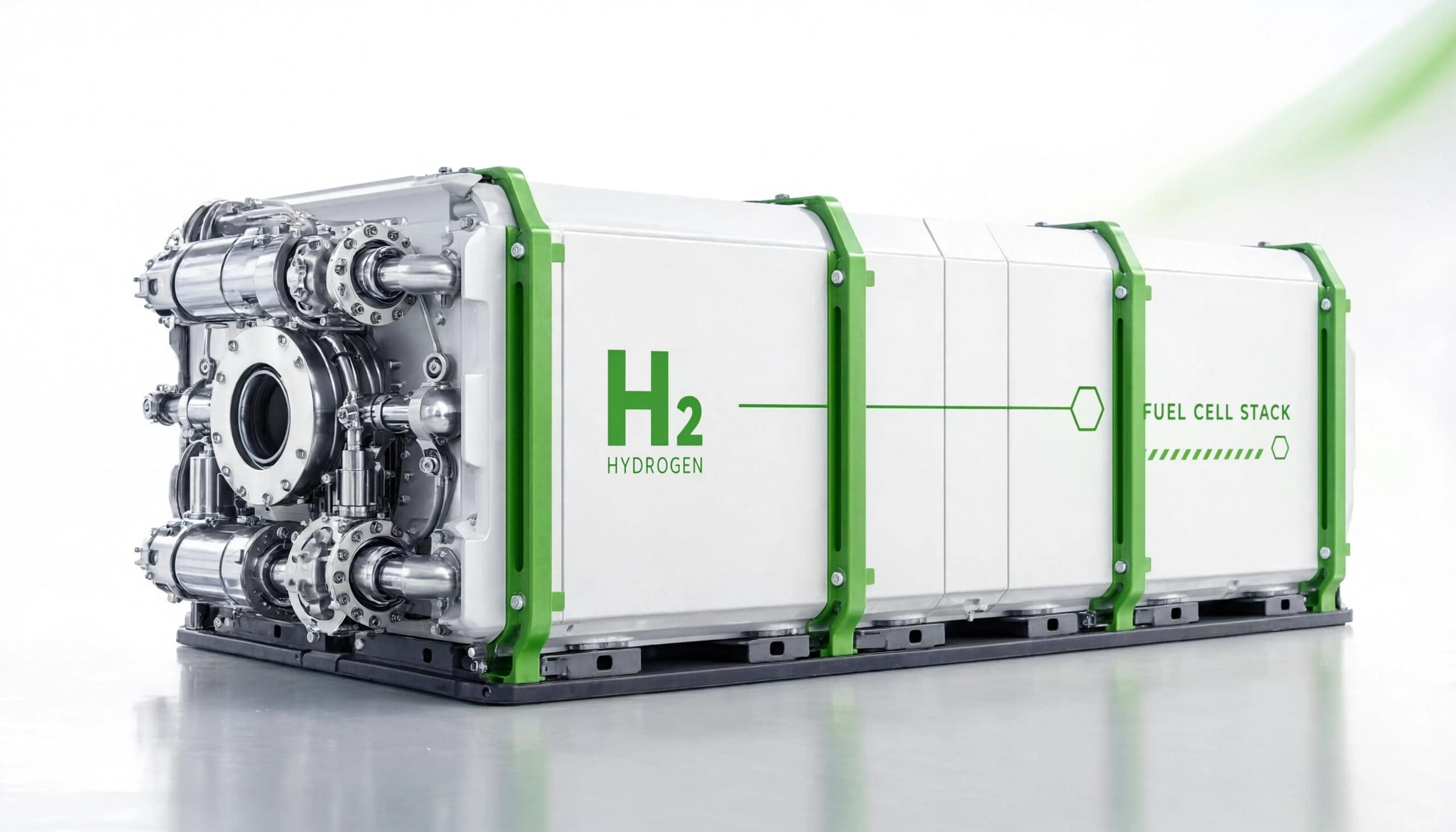
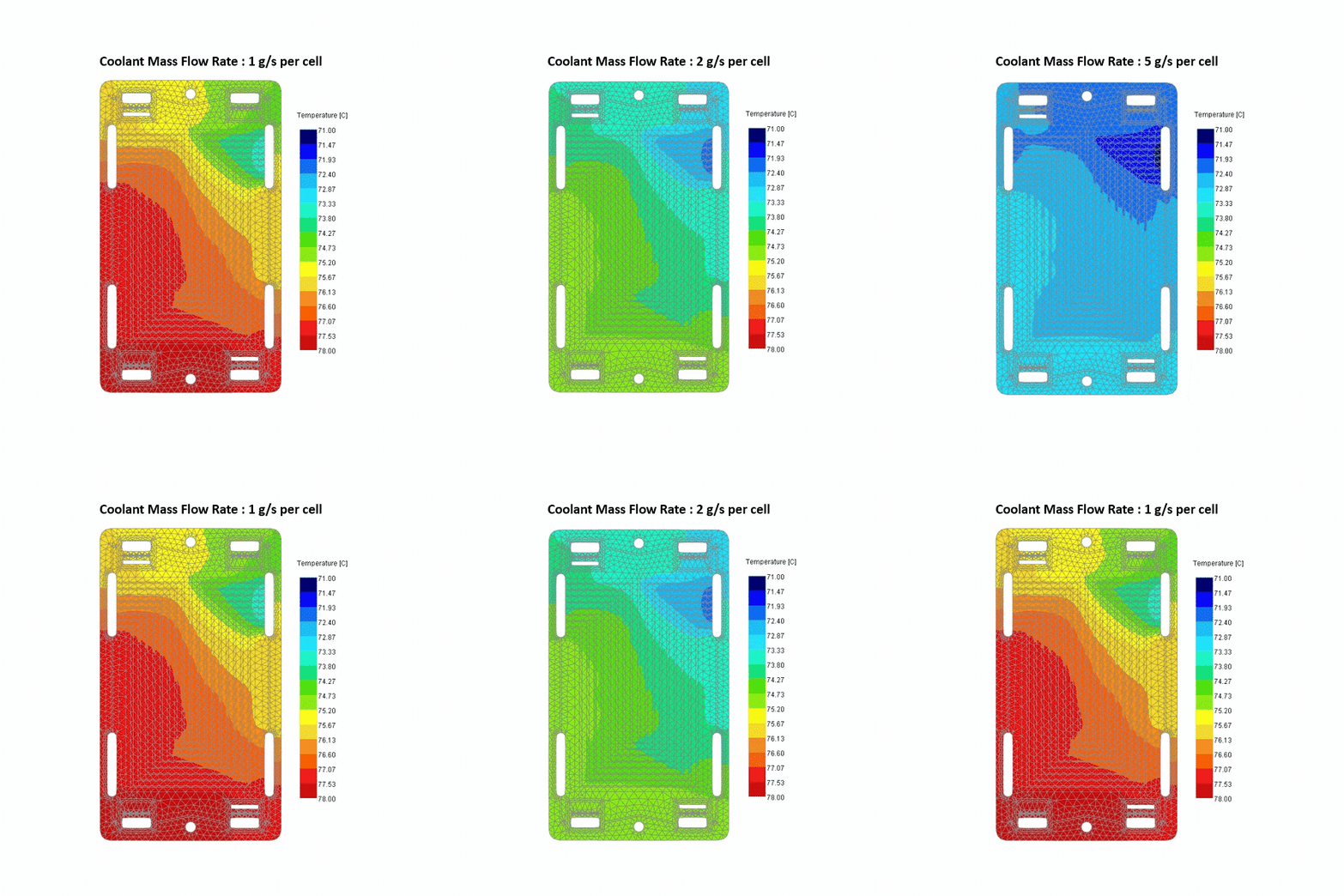
GT-SUITE supports higher-fidelity analysis with real-time simulation, hardware-in-the-loop testing, degradation modeling, and multi-domain co-simulation for the most demanding fuel cell development needs.
Solutions for PEMFC, SOFC, and Electrolysis.
Integration with other systems modeled in GT-SUITE.
Real-time modeling and XiL compatibility.
Dedicated templates for modeling fuel cell system components such as humidifiers and ejectors.
High fidelity 3D-1D model conversion from CAD geometry using GEM3D.
Library of fluids provided with software, plus option to add user defined fluids.
Frequently asked questions about fuel cell system modeling and simulation.
The complete fuel cell system, from individual cell and stack through the full balance of plant and integrated vehicle or power system, lives in one environment with GT-SUITE. Air and hydrogen handling, cooling circuits, water management, and power management controls all work together, with no need to stitch together separate tools.
GT-SUITE is built to handle this. You can start from a measured polarization curve if that’s what’s available, or use physical MEA property inputs if you have more detail. The example models are a practical starting point that scales to your stack size and refines as supplier data becomes available.
In more depth than most system-level tools. Water production, condensation in channels and pipes, liquid separation and purging, and two-phase flow effects are all modeled. Crossover of water, nitrogen, hydrogen, and oxygen is also captured, which matters for membrane hydration and long-term performance.
Yes. Real-time modeling and XiL compatibility mean the same model supports both system design and hardware-in-the-loop testing. GT-SUITE includes an out-of-box cathode stoichiometry controller, and the Fuel Cell Model Builder provides a working balance of plant model with controllers already in place.