Solutions

Electric Aircraft

Simulate and optimize eVTOL, hybrid-electric, and full-electric aircraft with GT-SUITE, from battery performance to full flight missions, cutting design time and certification risk.

Solution Overview

Integrated Multi-Physics Simulation for Electric Aircraft

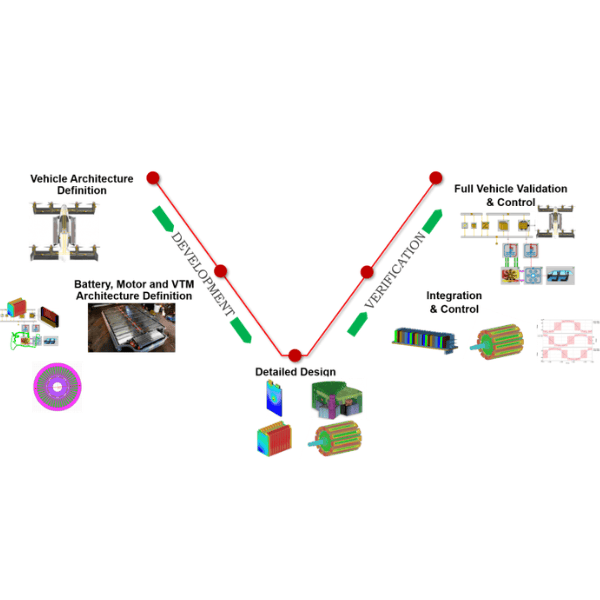
Electric aviation, from eVTOLs to hybrid-electric regional aircraft, depends on tightly coupled systems: batteries, thermal management, environmental controls, and propulsion. A weakness in any one affects certification, safety, and program viability. GT-SUITE models these systems together in a single multi-physics environment, covering ePowertrain, battery electrochemistry and aging, thermal management, environmental control, fuel and cryogenic systems, landing gear, and 3-DOF/6-DOF flight dynamics, including FLIGHTLAB integration for rotorcraft and eVTOL. With FAA certification demanding evidence physical testing alone can’t efficiently provide, GT-SUITE runs detailed simulations in minutes to de-risk designs before hardware is built. The approach is proven with Airbus (eVTOL battery thermal and SOC performance), NASA (Orion module thermal runaway), and Advanced Rotorcraft Technology (rotor-to-cell eVTOL simulation). GT-SUITE supports full-electric, hybrid-electric, and hydrogen fuel cell programs from concept through certification.

Untitled-600-x-600-px-600-x-600-px-15
Untitled-600-x-600-px-79

Application Highlights

Simulation Capabilities That Support Certification

  • Predict range, state-of-health, and aging of electrified propulsion systems
  • Ensure optimized vehicle energy management
  • Verify thermal management designs and control strategies for components all the way to complete systems
  • Complete electrical and thermal system simulation, including motors, power electronics, batteries, fuel cells, piston engines, gas turbines
  • 3-DOF and 6-DOF dynamic models for any flight mission
  • Proven and validated battery and thermal system modeling
  • Build controls using a comprehensive controls library, including finite state machines in GTSUITE, or co-simulate with Simulink to develop and optimize control algorithms
  • Easy results viewing and optimization
Untitled-600-x-600-px-78

Deeper Fidelity for Battery and Thermal Modeling

Precision modeling for battery, thermal, and calibration accuracy, including cell-to-cell temperature and current distribution, and validation against real test data.

Server

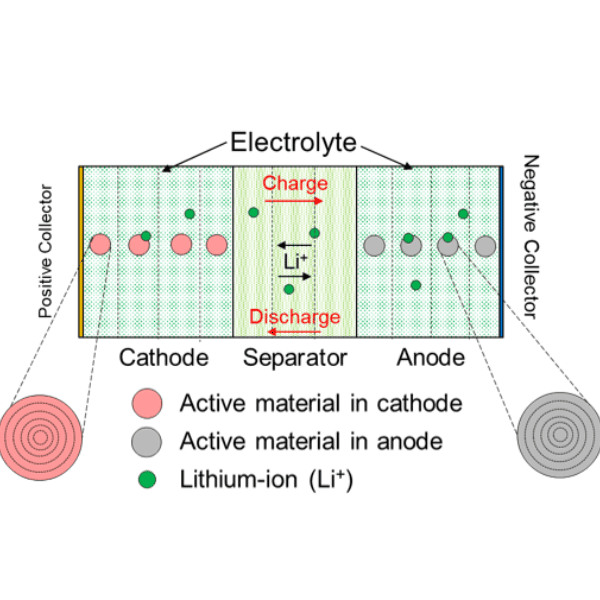
Physics-Based Electrochemical Modeling

GT-AutoLion predictively models electrochemical processes within Lithium-ion cells, including aging and degradation, without relying solely on test data. A comprehensive electrochemical materials database is included, reducing laboratory testing burden.

Server

Cell-to-Cell Thermal and Electrical Distribution

Electrically discretize battery systems to capture module-to-module, cell-to-cell, or intracellular variations in temperature, current, and State of Charge. This level of resolution reveals design risks that pack-level models cannot detect.

Server

Model Calibration from Test Data

Characterize battery models directly from measured discharge curves, HPPC test data, or other standard test protocols. This ensures simulation accuracy is grounded in real hardware behavior from the earliest design stages.

Server

Integrated Thermal Management and Cabin Comfort

Thermal management systems are integrated across all components, from the battery pack to the cabin, ensuring safe operating temperatures and passenger comfort are maintained simultaneously throughout the flight mission.

Server

Battery Degradation and State of Health Prediction

Predict battery aging, capacity fade, and State of Health over the full operational lifecycle using GT-AutoLion's integrated electrochemical and mechanical degradation models. Engineers can identify failure risks before they reach hardware.

Server

Thermal Runaway Simulation and Safety Analysis

Simulate thermal runaway propagation at the cell, module, and pack level to support safety validation and regulatory compliance. Models run faster than real-time on standard hardware, enabling rapid design iteration before physical testing.

FAQs For Electric Aircraft

Common questions from engineers evaluating GT-SUITE for electric aircraft development.

  • Can GT-SUITE simulate the full electric aircraft system in one environment, or do I need separate tools for each subsystem?

    GT-SUITE models the complete aircraft system, including ePowertrain, battery electrochemistry, thermal management, environmental control systems, landing gear, and flight dynamics, within a single integrated multi-physics environment. This means changes in one domain, such as battery sizing or thermal architecture, immediately propagate through the rest of the system without manual data transfers between tools.

  • How does GT-SUITE support FAA certification efforts?

    Physical testing alone cannot efficiently cover the evidence required for FAA airworthiness certification, which can cost upwards of $100 million for a commercial aircraft. GT-SUITE runs large, fully detailed simulations in minutes regardless of component sizing, enabling engineers to explore the design space thoroughly and replace or reduce physical test requirements before hardware is built.

  • Has GT-SUITE been validated for real electric aircraft programs?

    The approach has been proven in practice across multiple programs. GT collaborated with Airbus on eVTOL battery pack thermal performance and State of Charge over real flight missions, with NASA on thermal runaway simulation of the Orion module battery pack, and with Advanced Rotorcraft Technology on a complete rotor to battery cell simulation solution addressing strict airworthiness requirements for eVTOL design.

  • Can GT-SUITE predict battery thermal runaway and degradation at the cell level?

    GT-SUITE models thermal runaway propagation and battery aging down to the individual cell level using electrochemical modeling techniques. Each thermal runaway simulation takes approximately 15 minutes to set up and runs 2 to 4 times faster than real time on a standard laptop, giving engineers the ability to rapidly evaluate safety risks and battery design decisions without relying solely on physical testing.

Connect with an Expert

Ready to discuss how our 1D System Simulation services can help your project? Fill out the form below and our team will get back to you within 1 business day.

Prefer to call?

+1 (555) 123-4567 or email services@gammatech.com

By submitting this form, you agree to be contacted by GammaTech regarding our 1D System Simulation services. We respect your privacy and will not share your information with third parties. See our Privacy Policy for more details.