





Scalable 1D–3D Model Fidelity
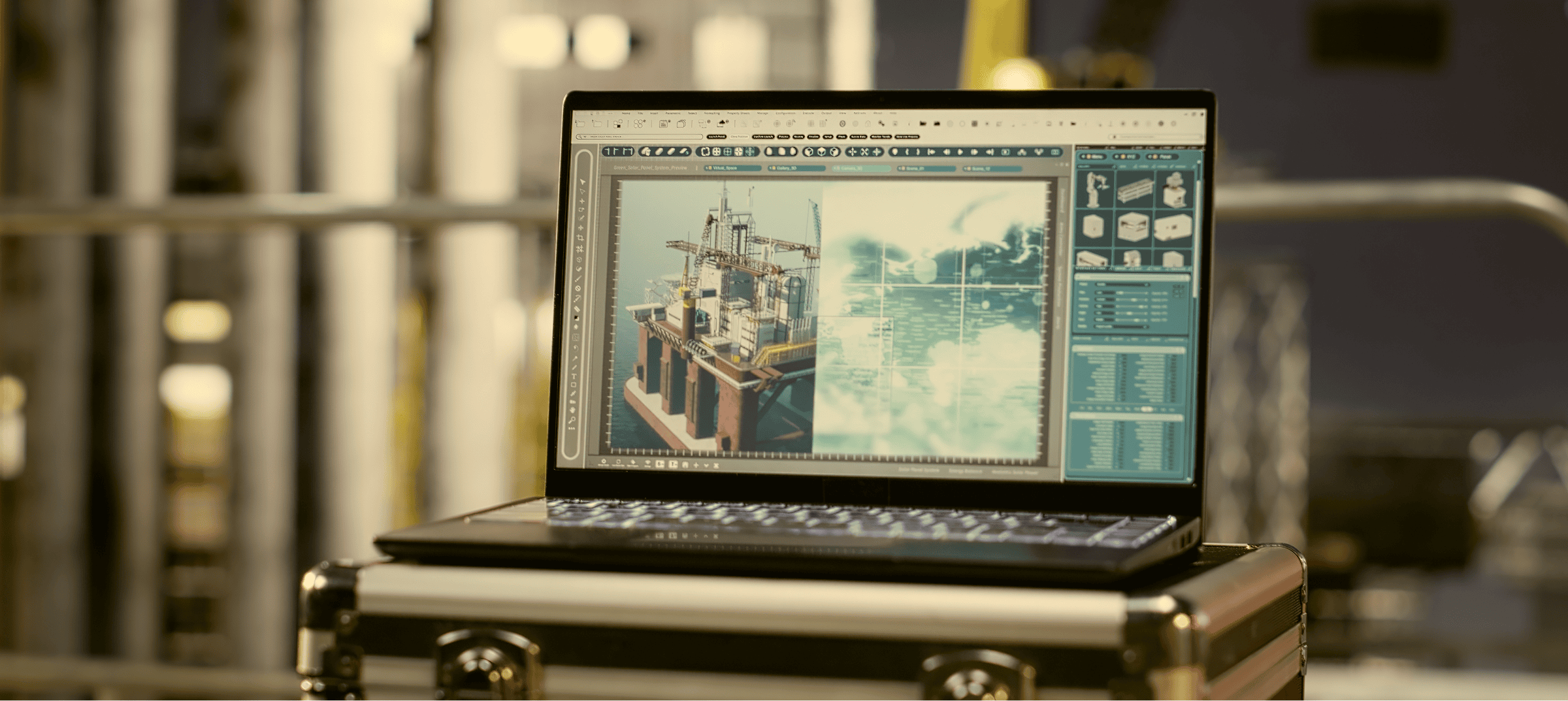
Move seamlessly from fast 1D driveline models to detailed 2D/3D and finite element representations — add fidelity only where needed, without switching tools.
GT-SUITE offers the ability to increase the fidelity of driveline models for more advanced drivability studies
Solution Overview
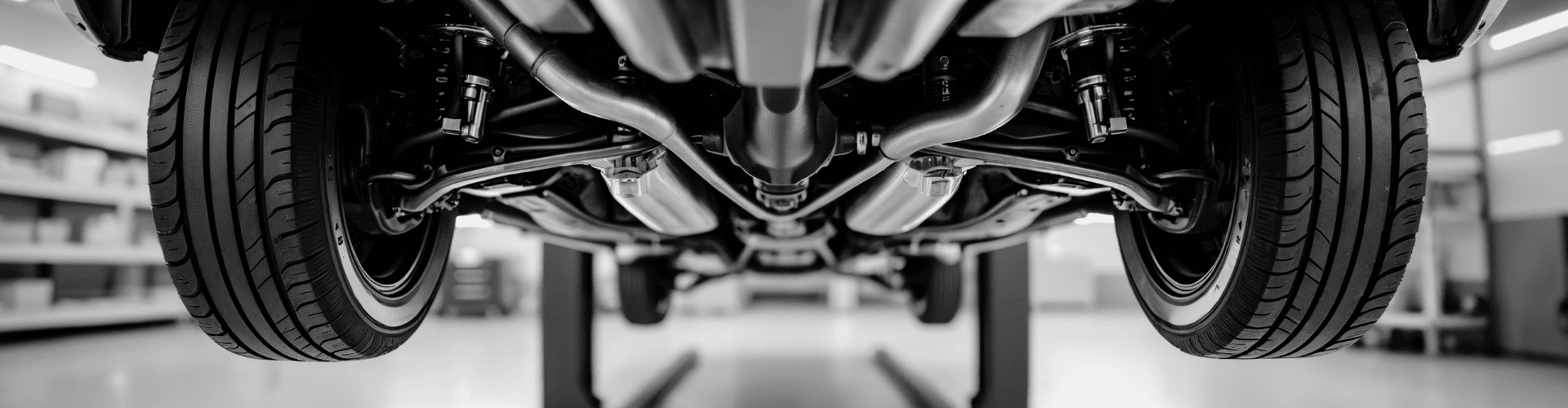
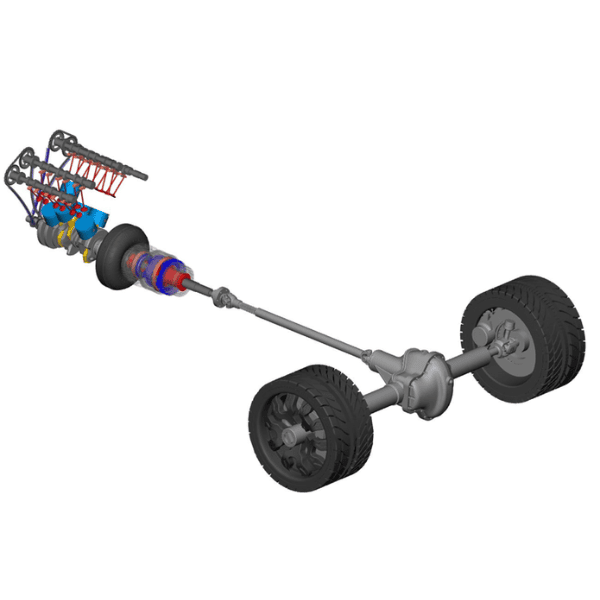
GT-SUITE builds driveline models that capture torsional dynamics under both steady-state and transient loads. Starting from a baseline vehicle model, you add compliant connections, slipping elements, and torsional damping only where they matter, integrating directly with a detailed transmission and a Fast Running Model of your GT-POWER engine.
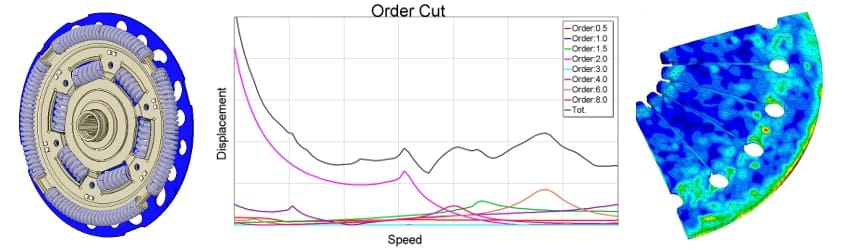
The same model supports tip-in and tip-out transients, in-gear driveline boom, judder, lugging, and fuel cut and resume vibration, with 1D, 2D, and 3D linear frequency domain analysis to extract natural frequencies and validate transient work. Duty cycle simulation extends the same framework to durability assessment, giving engineers one consistent view of powertrain behavior across the load history.
Application Highlights
Advanced Features
From resonance prediction to durability planning, these capabilities help you resolve driveline issues at the simulation stage, before they reach the test track.
Move seamlessly from fast 1D driveline models to detailed 2D/3D and finite element representations — add fidelity only where needed, without switching tools.
Simulate throttle tip-in/out events with fully coupled engine and driveline dynamics to catch and resolve shunt, shuffle, and clunk before a physical prototype exists.
Predict in-gear acceleration/deceleration boom and low-speed judder/lugging in one analysis, so drivability and comfort issues are caught at the design stage instead of on the test track.
Predict vibration from fuel cut/resume events — a must-have for validating ride comfort in modern start-stop, hybrid, and cylinder-deactivation architectures.
Run realistic speed and load duty cycles to assess long-term driveline durability early, cutting warranty risk and reducing physical durability testing.
Run rapid linear frequency-domain sweeps across the full 1D/2D/3D driveline model to flag resonance risks quickly, before investing time in detailed transient simulation.
Answers to the questions engineering teams ask most when evaluating GT-SUITE for drivetrain simulation.
From gear rattle and excessive chain tension to belt flap, shuffle, clunk, and humming in the low-frequency spectrum, GT-SUITE covers the full spectrum of drivetrain issues. The simulation environment lets you identify root causes before physical hardware is built, saving significant time and cost in the development cycle.
Gear mesh losses, bearing friction, shaft seal drag, and oil churning losses are all predicted in detail within a single integrated drivetrain model. This level of fidelity gives engineers confidence that simulation results reflect real-world behavior, not simplified approximations.
Yes — steady-state and transient simulation are both supported within the same modeling environment, allowing engineers to evaluate drivetrain performance across the full range of operating conditions. This is particularly valuable when assessing dynamic loading events such as launch, gear shifts, or sudden torque reversals.
Drivetrain models are built using a graphical, object-based interface where components are selected and connected from a template library, with no coding required. For engineers who want to go further, GT Intelligence Studio offers AI-powered tools built directly into GT-SUITE: AI.advisor: Real-time answers, best practice guidance, and modeling tips as you work.