





Fast & Robust ODE Integration
6 ODE integrators provide fast run times and implicit schemes suitable for stiff bending dynamics.
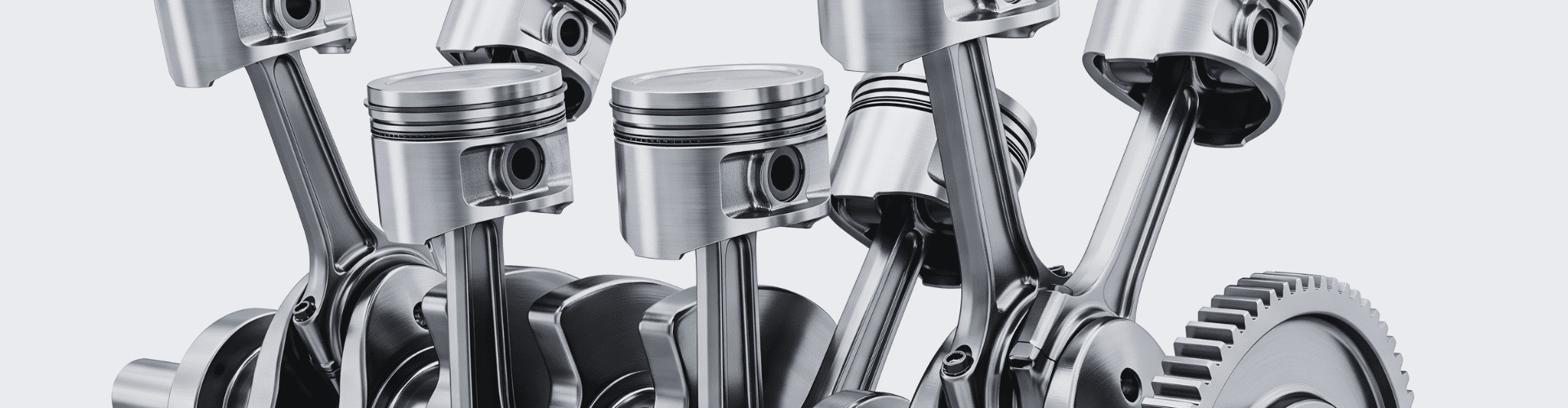
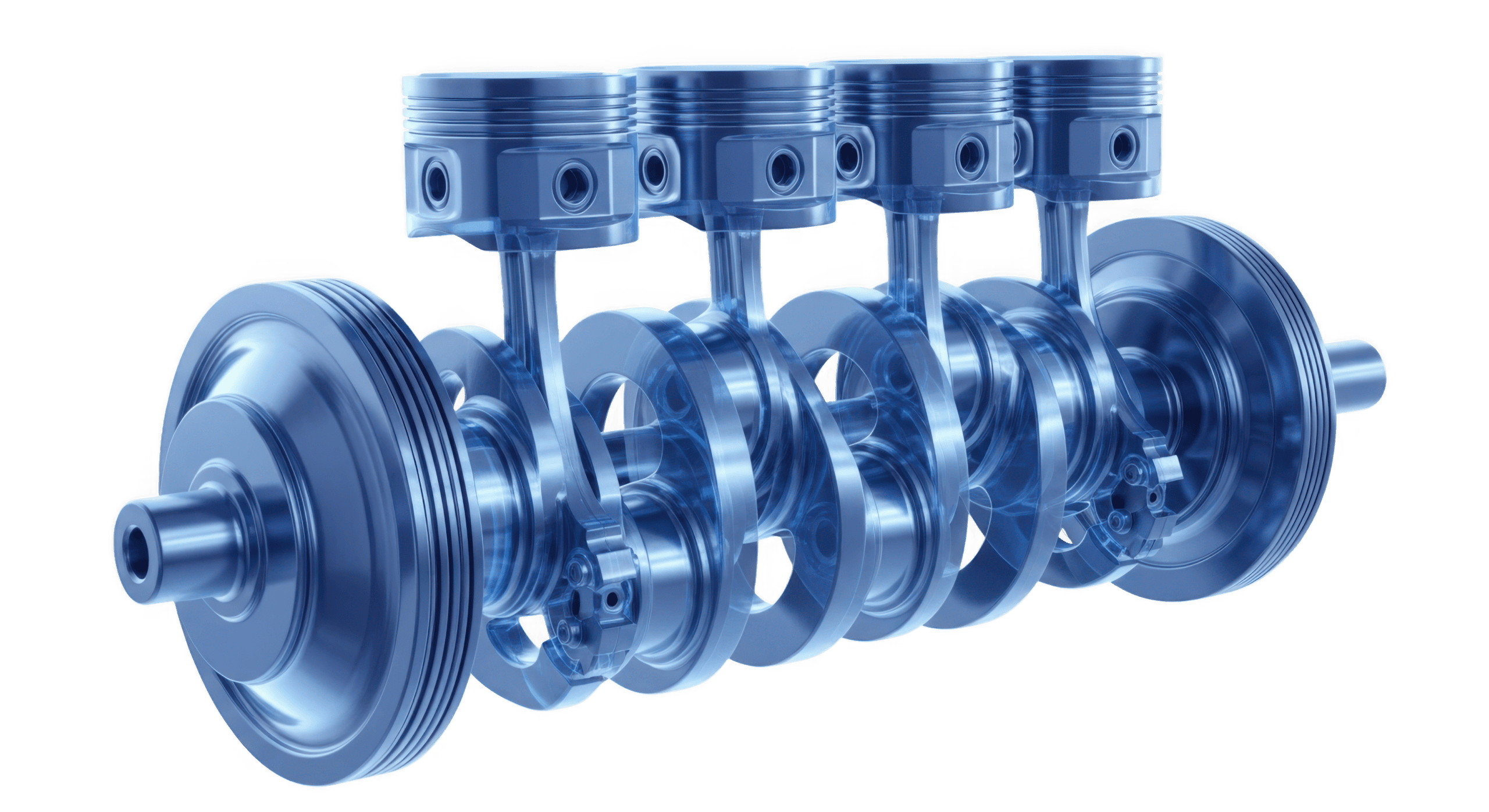
GT-SUITE’s Cranktrain application offers a variety of practical engineering analyses.
Solution Overview
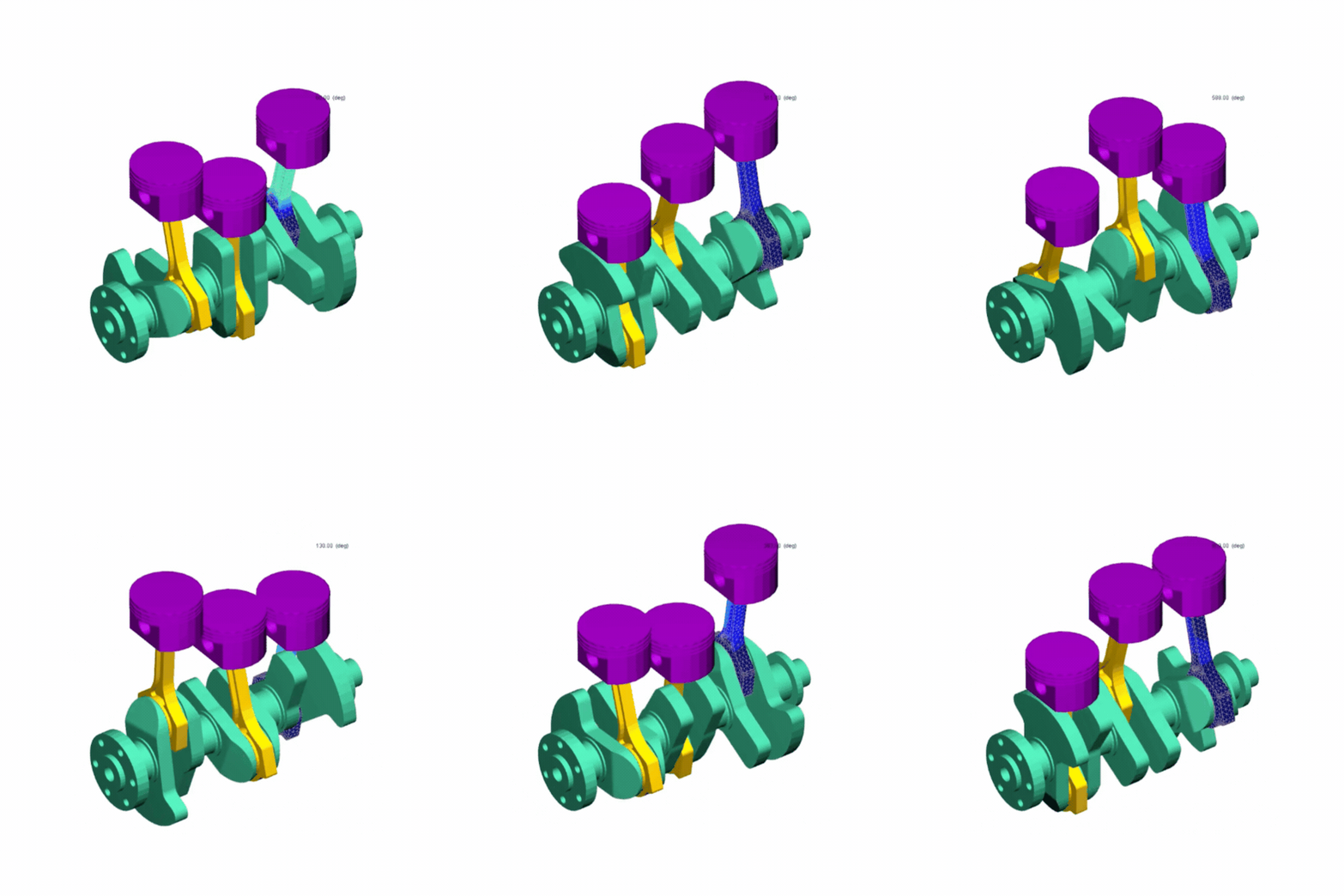
In addition to crankshaft definition with basic dimensions and material properties, GT-SUITE offers a streamlined process for importing solid models to extract key geometry, mass and moments of inertia. The crankshaft can easily be switched between rigid, torsional and bending models for balance, vibration and stress evaluation respectively.
The cranktrain application supports a library of bearing models of various levels of fidelity from basic mobility to formal EHD solutions.
Additionally, skirt and ring models are available for preliminary friction prediction and evaluation at the concept phase.
Application Highlights

Advanced Features
Optimize crankshaft performance, durability, and powertrain system integration with advanced simulation tools designed for complex engine development workflows.
6 ODE integrators provide fast run times and implicit schemes suitable for stiff bending dynamics.
Automatic extraction of equivalent beam compliances of crankwebs (for 3D bending) from 3D FEA static results.
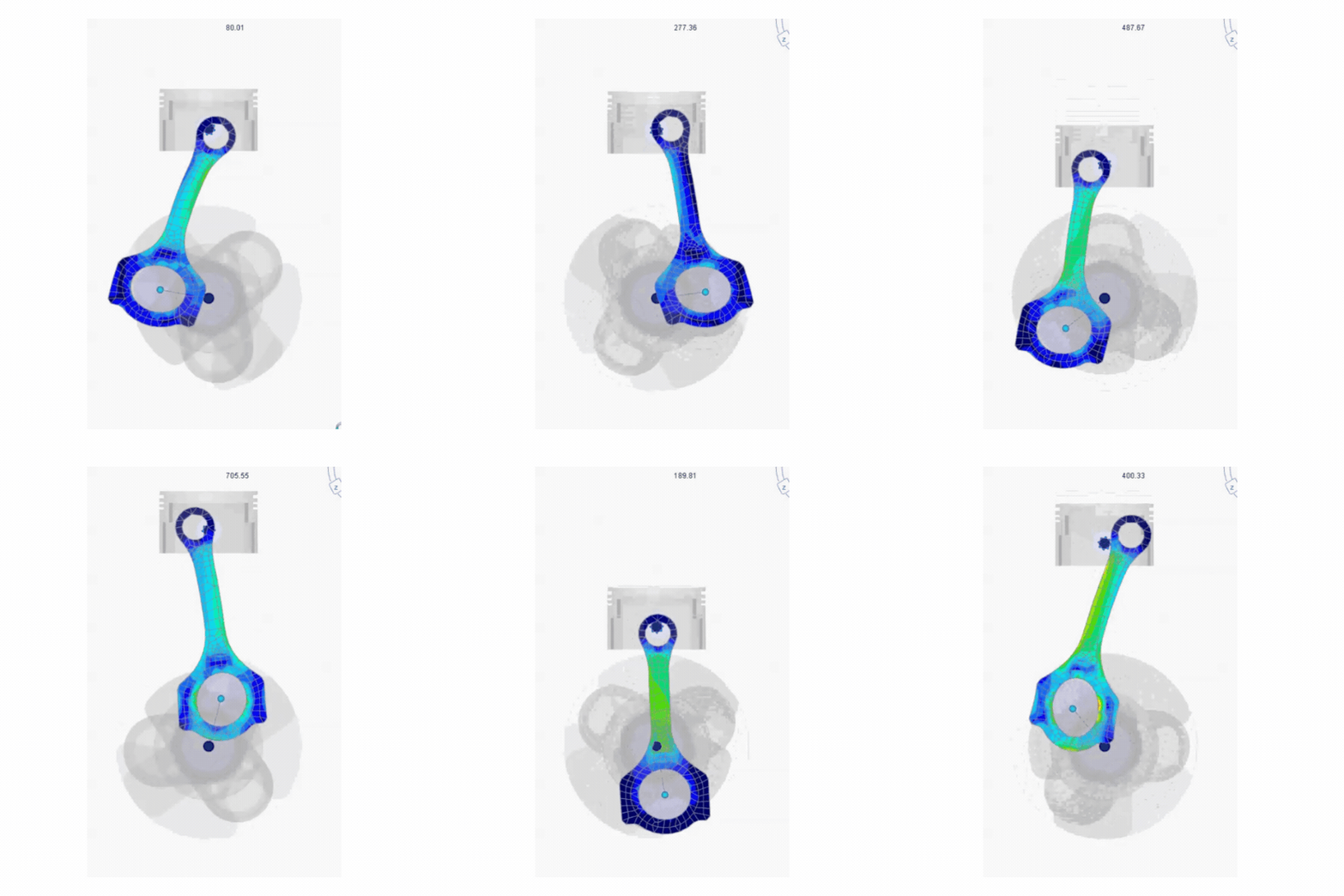
3D stress, fatigue, and crankshaft reliability analysis using 3D FEA unit-load stress recombination.
Elastomer damper model based on Maxwell’s solid approach.
Consistent treatments in both time and frequency domains.
Steady-state or transient simulations.
Find answers to common Cranktrain simulation questions.
GT-SUITE offers three analysis modes: rigid, torsional, and 3D bending. Each mode is suited to a different stage of development or level of detail required. Rigid analysis is the starting point for forces, bearing loads, and torque distribution. Torsional analysis focuses on vibration behavior, while 3D bending is used for crankshaft durability and stress evaluation. The model can be switched between modes without rebuilding the system, making it easy to progress from concept through detailed validation.
Yes. GT-SUITE supports 3D stress and fatigue analysis using FEA unit-load stress recombination and includes a dedicated workflow for crankshaft evaluation in accordance with the IACS M53 standard. The M53 analysis combines rigid bending results with frequency-domain torsional analysis to produce an equivalent alternating stress, which is then compared against the fatigue strength of the selected material. This makes it well suited for marine and large-bore engine certification programs.
Yes. The Cranktrain application is designed to operate as part of a fully integrated system model. It connects directly with GT-POWER for combustion and torque inputs, as well as with lubrication circuits, valvetrain systems, timing drives, and vehicle drivetrains within the same simulation environment. This allows engineers to evaluate interactions such as combustion-induced torsional excitation, oil supply effects on bearing performance, and drivetrain recoil loads without transferring data between separate tools.
Questions before you submit?