Solutions

Cabin Comfort

GT-SUITE delivers real-time HVAC optimization for passenger comfort through advanced thermal simulation and comprehensive design studies for efficiency.

Solution Overview

Integrated Cabin Comfort Simulation

Cabin climate directly affects occupant wellbeing, energy consumption, and, in battery electric vehicles, driving range. Engineers need simulation tools that connect HVAC system design, cabin thermal behavior, and controls development within a single workflow, rather than managing disconnected analyses across multiple tools.GT-SUITE provides a scalable cabin thermal modeling environment that covers the full design process, from early phase HVAC sizing and compressor control strategy evaluation to detailed occupant thermal comfort prediction. Solar load analysis and zonal temperature modeling allow teams to assess real-world thermal conditions accurately across diverse climates and drive cycles.

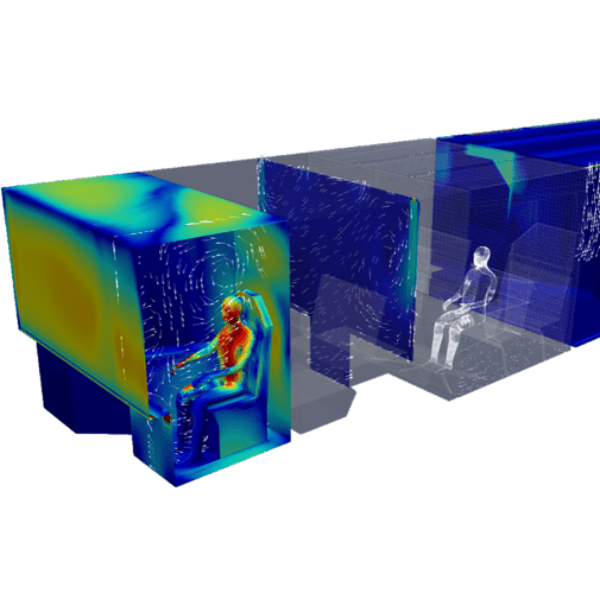
For high-fidelity comfort assessment, GT-SUITE co-simulates with GT-TAITherm, which resolves conduction, radiation, and solar effects on cabin surfaces while the human thermal manikin model quantifies occupant comfort at a physiological level. Models run at real-time speeds, supporting hardware-in-the-loop integration and controls calibration directly within the simulation environment. For BEV programs, accurate cabin thermal load modeling connects HVAC energy consumption directly to range prediction, giving engineers the data needed to make informed design decisions earlier in development.

Comprehensive, Easy-To-Use Solution

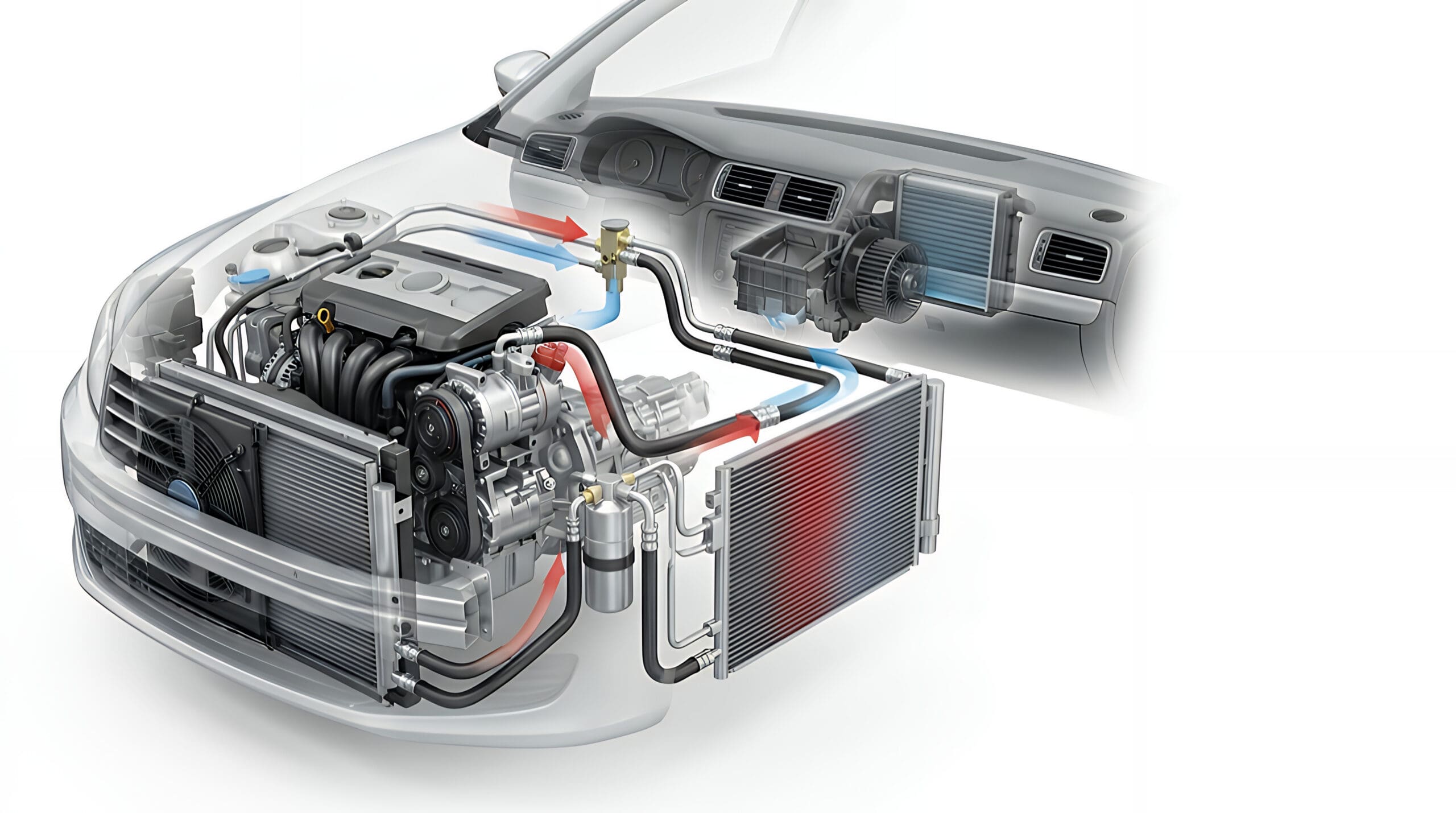
Models built in GT-SUITE enable rapid definition and calibration of cabins, allowing various design studies, such as component layout choices in the A/C loop, or assessing the effect of different window glazings on the overall HVAC system performance. These cabin models can be used to provide boundary conditions to air conditioning loops with varying levels of zonal resolution.

Untitled-600-x-600-px-7

Co-Simulation with GT-TAITHERM

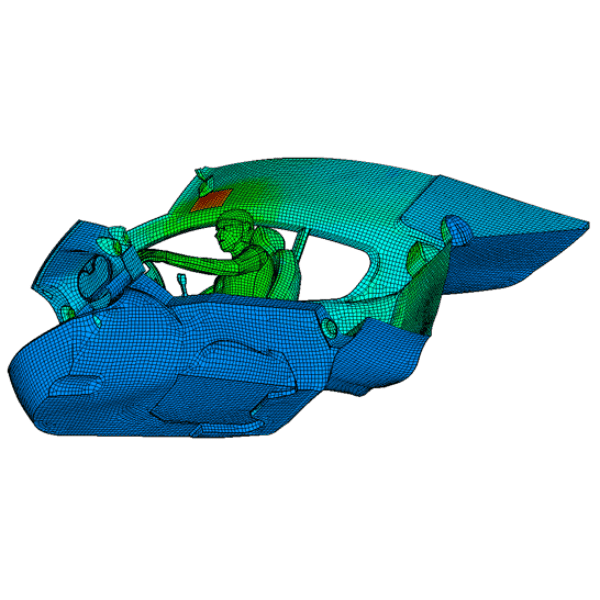
GT-SUITE offers the ability to create cutting-edge models by cosimulating with ThermoAnalytics’ TAITherm and GT-TAITherm, a special version of TAITherm packaged directly inside GT-SUITE. With these cosimulations, real-time capable 3D cabin comfort models can be created which are used standalone or directly implemented into a full GT-SUITE integrated thermal model.

Untitled-600-x-600-px-9

Application Highlights

High-Fidelity 3D Cabin Modeling

  • Easy to use cabin models of varying resolutions depending on goals
  • Pre-defined geometries for most common vehicle classes
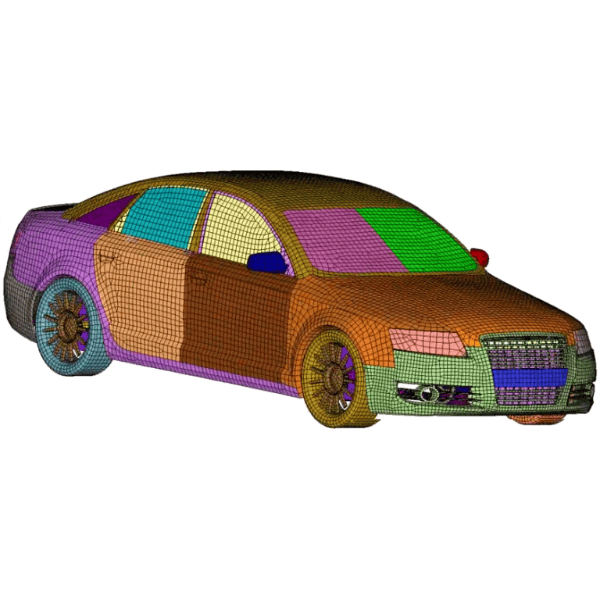
  • Real-time capable, 3D high resolution (up to 100,000 volumes) cabin models
  • Seamlessly connect cabins into other subsystems (i.e. A/C, Vehicle Cooling) modeled in GT-SUITE for feedback
  • Integration with ThermoAnalytics’ TAITherm tool for improved thermal accuracy and passenger comfort predictions
  • Integration with 3D CFD Tools (GT-CONVERGE, Fluent, STAR, OpenFoam, and other codes)
Untitled-600-x-600-px-8

Advanced Cabin Comfort Simulation

GT-SUITE enables cabin comfort simulation for automotive, aircraft, and commercial vehicles, helping optimize HVAC performance and occupant comfort.

service-icon-1

Zonal Temperature-Based Compressor Control

Optimize compressor control strategies using zonal cabin temperature data, enabling precise, energy-efficient climate management. This capability supports the development of smarter HVAC controls that respond dynamically to occupant conditions across different cabin zones.

service-icon-1

Seamless Integration with GT-SUITE System Models

Connect cabin models directly into broader GT-SUITE simulations including A/C evaporator circuits, vehicle cooling, and powertrain thermal systems for fully integrated, system-level analysis. This eliminates workflow fragmentation and accelerates design iteration across subsystems.

service-icon-1

High-Fidelity 3D Comfort Prediction with TAITherm Co-Simulation

When co-simulating with GT-TAITherm, leverage TAITherm's built-in thermal manikin model to predict occupant thermal comfort with high spatial resolution. This provides physiologically accurate comfort assessments that go beyond simple air temperature metrics .

service-icon-1

CFD Flow Field Import for Enhanced Accuracy

Import pre-computed 3D CFD flow fields into the GT-TAITherm co-simulation to replace GT-SUITE's internal flow solution where higher spatial fidelity is required. This gives engineers the flexibility to apply best-in-class flow data without rebuilding their simulation workflow.

service-icon-1

Multi-Platform Cabin Design

Model and analyze cabins for automotive, aircraft, and other vehicle platforms within a single, unified simulation environment. GT-SUITE's flexible cabin architecture supports diverse geometries and boundary conditions, reducing the need for platform-specific toolchains.

service-icon-1

Real-Time Drive Cycle Simulation

Copilot said: Execute full drive cycles, including standard regulatory cycles such as the NEDC, at real-time speeds, enabling rapid evaluation of HVAC system performance across representative operating conditions. This capability is particularly valuable for controls development, hardware-in-the-loop (HiL) integration, and BEV range optimization.

Cabin Comfort FAQs

Frequently asked questions about cabin comfort simulation and HVAC optimization in GT-SUITE.

  • Can GT-SUITE cabin models be connected to a full vehicle thermal system, or do they run in isolation?

    Cabin models built in GT-SUITE connect directly into broader vehicle thermal simulations, including A/C loops, vehicle cooling systems, and powertrain thermal models, all within a single integrated environment . This means boundary conditions flow naturally between subsystems, eliminating the need to manually transfer data between separate tools and enabling true system-level design studies.

  • What level of cabin model resolution is available, and how do I choose the right one for my project?

    GT-SUITE offers cabin models ranging from simplified 1D representations to real-time capable 3D models with up to 100,000 volumes, with pre-defined geometries available for the most common vehicle classes . The appropriate resolution depends on the stage of development: lower-resolution models suit early-phase HVAC sizing and controls analysis, while high-resolution 3D models are used for detailed comfort prediction and system integration.

  • Can the cabin comfort simulation be used for applications beyond passenger cars?

    GT-SUITE’s cabin modeling framework supports automotive, aircraft, and other vehicle platform types, making it applicable across a broad range of transportation and mobility programs . The same core simulation environment, including HVAC integration, zonal temperature control, and co-simulation with TAITherm, applies regardless of the cabin geometry or platform.

  • Can GT-SUITE cabin models help reduce energy consumption, not just predict comfort?

    Cabin simulation in GT-SUITE is designed to address both objectives simultaneously, maximizing occupant comfort while minimizing HVAC energy draw. This is particularly relevant for battery electric vehicles, where cabin heating and cooling directly compete with driving range, making accurate thermal load modeling essential for controls optimization and component sizing. Engineers can use the models to evaluate technologies such as low-emissivity glass coatings, localized spot heating, and compressor control strategies before committing to hardware.

Connect with an Expert

Ready to discuss how our Systems Simulation services can help your project? Fill out the form below and our team will get back to you within 1 business day.

Questions before you submit?

Email us at services@gammatech.com

By submitting this form, you agree to be contacted by Gamma Technologies regarding our services. We respect your privacy and will not share your information with third parties. See our Privacy Policy for more details.