






CAD-Integrated 3D Model Building
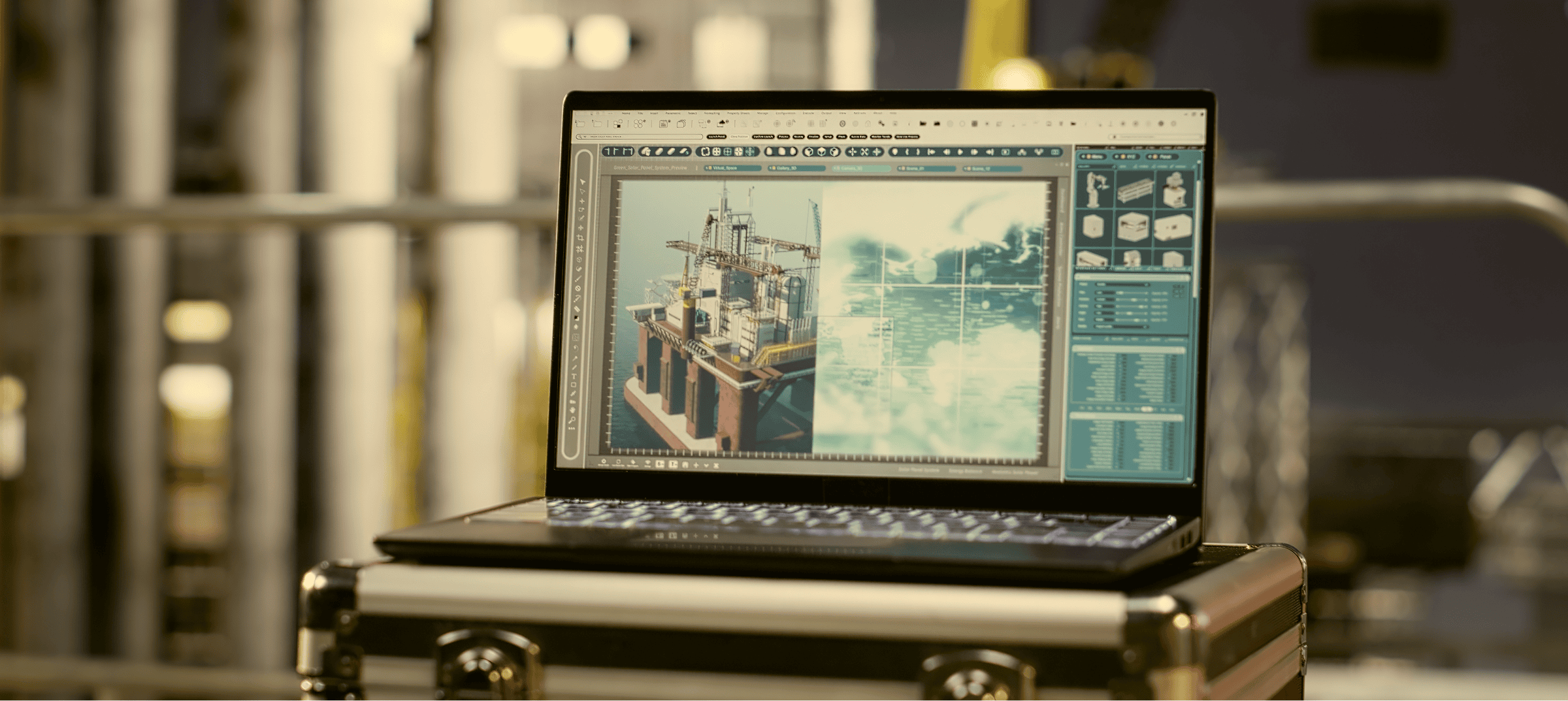
Build accurate 3D rigid body vehicle models directly from CAD geometry using GEM3D and SpaceClaim preprocessing tools. This eliminates manual geometry translation and accelerates model setup from design data.
GT-SUITE's predictive 3D multibody platform models vehicle dynamics, suspension, and NVH across every architecture, from concept to validation.
SOLUTION OVERVIEW
GT-SUITE’s 3D Vehicle Mechanics solution gives engineers a fully predictive environment for analyzing vehicle dynamics, ride, handling, and NVH within a single integrated model. Rather than managing separate tools for suspension kinematics, powertrain dynamics, and chassis behavior, engineers work within one platform where all subsystems interact as they do in the physical vehicle. The solution applies a formal Multibody Dynamics methodology to model any suspension architecture, from A-Arm and McPherson to H-Arm configurations, across all major powertrain layouts including AWD, FWD, RWD, HEV, and EV . Road surface excitations and powertrain-induced forces are captured simultaneously, producing results that reflect real operating conditions rather than isolated component behavior.
Engineers can couple the vehicle model with dynamic engine models, detailed driveline components, and Matlab/Simulink controllers, and run DOE studies to optimize mount locations and suspension parameters at both the component and system level. The result is faster design decisions, fewer physical prototypes, and greater confidence in vehicle performance targets before hardware is built.
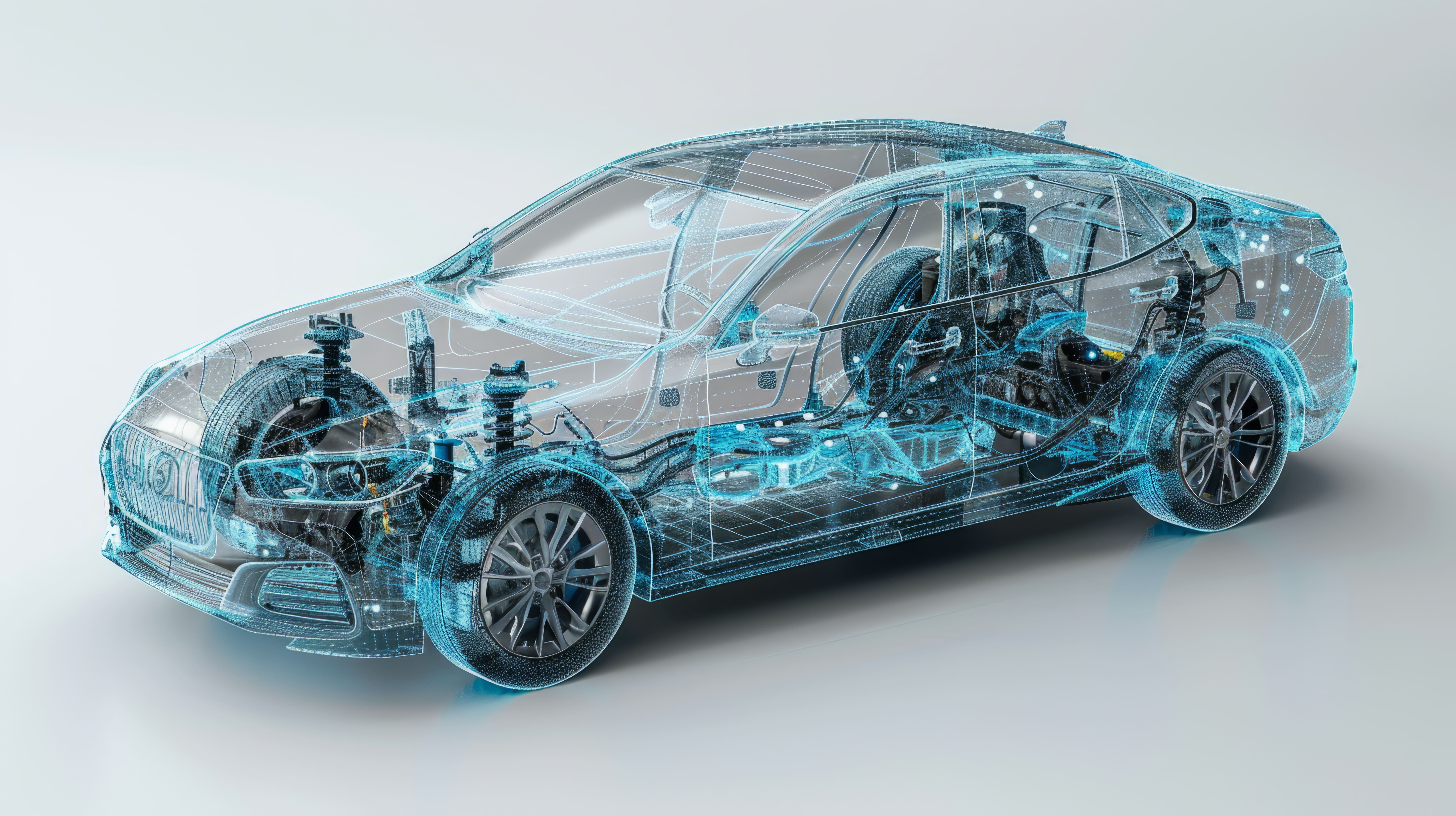
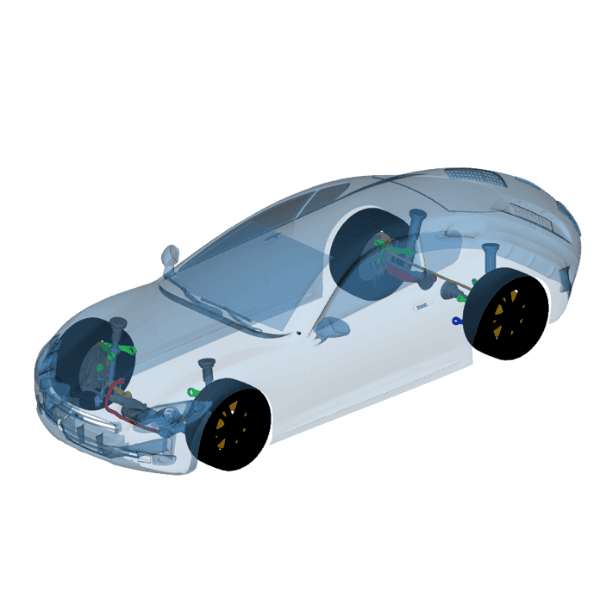
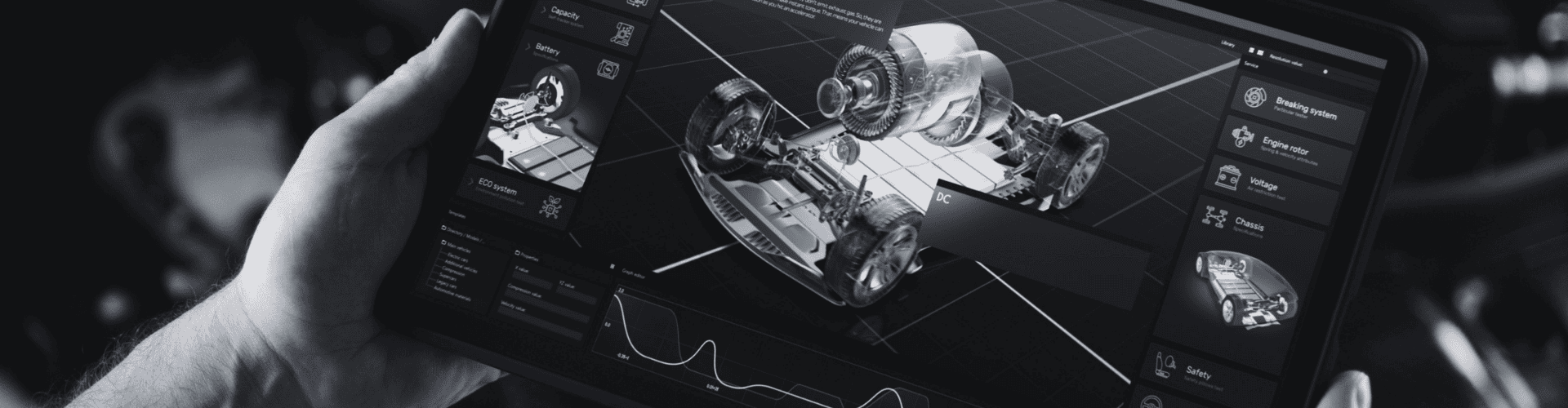
A rich library of customized control, mechanical and hydraulic model-based components empowers users to create an advanced vehicle model including subsystems in order to assess their interaction at higher stages of development and/or validation. All subsystem models can be easily interchanged within the GT-SUITE platform.
Combine GT-SUITE comprehensive template libraries such as engine and transmission for dedicated tire characterization.
By capturing excitations from both the road and the powertrain altogether, these models are used to perform accurate and efficient vehicle dynamics and driveline noise, vibration and harshness (NVH) evaluations.
APPLICATION HIGHLIGHTS
ADVANCED FEATURES
Predict and optimize vehicle behavior through integrated 3D dynamics simulation of chassis, suspension, and powertrain systems.
Build accurate 3D rigid body vehicle models directly from CAD geometry using GEM3D and SpaceClaim preprocessing tools. This eliminates manual geometry translation and accelerates model setup from design data.
Assess the structural performance of suspension components under real operating loads using integrated 3D finite element analysis. Engineers can identify failure risks and optimize component design without leaving the GT-SUITE environment.
Capture complex tire-road interaction with full integration of FTire, a physics-based, 3D nonlinear tire model. This delivers high-fidelity results for ride comfort, NVH, and handling evaluations across diverse road conditions.
Generate tire force and moment maps in GT-SUITE using the 3D Pacejka approach, removing dependency on external tire data and speeding up early-stage vehicle dynamics studies.
Characterize elastomeric powerplant mounts with a Maxwell solid-based damper model, capturing frequency-dependent stiffness and damping for accurate NVH analysis without extensive physical testing.
GT-SUITE's built-in DOE and optimization engine lets engineers systematically explore and optimize parameters, from individual components to full vehicle configurations, addressing suspension tuning, mount placement, and handling targets in a single workflow.
Answers to common questions about 3D Vehicle Mechanics and simulation.
GT-SUITE is built to handle virtually any architecture an engineer encounters — suspension types include A-Arm, H-Arm, and McPherson, while powertrain support spans AWD, FWD, RWD, HEV, and EV platforms . Transmission coverage is equally comprehensive, from AT, MT, AMT, DCT, and CVT to IVT and entirely new, innovative concepts integrated with chassis and suspension . Engineers are not constrained by fixed templates, which makes it well-suited for both production programs and advanced concept development.
The 3D vehicle model is built for full system integration, running coupled with dynamic engine models, detailed transmission and driveline components, powerplant block and mounts, and Matlab/Simulink controllers. By capturing excitations from both the road surface and the powertrain simultaneously, engineers can perform accurate NVH, shift quality, and driveability evaluations within a single simulation environment.
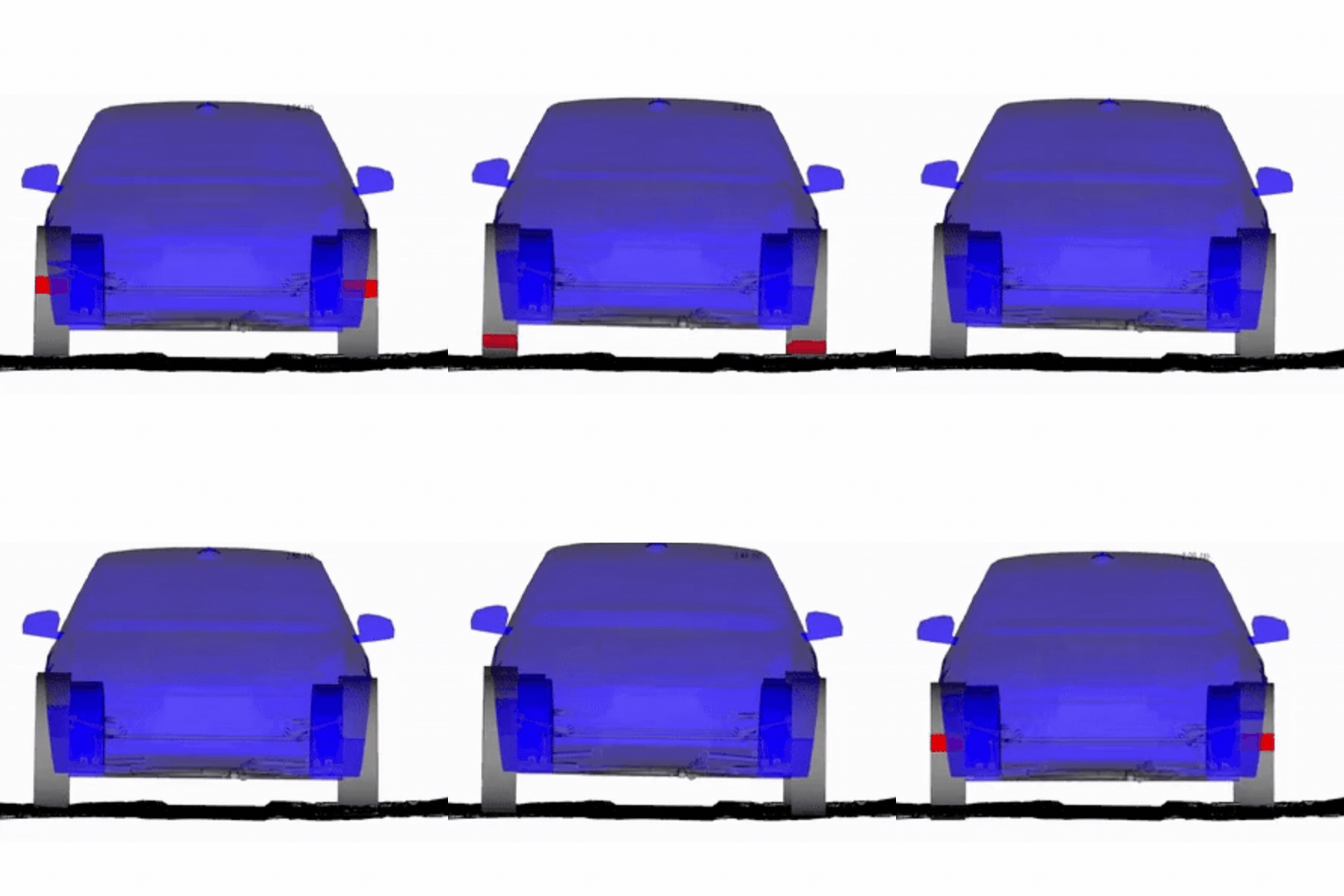
A formal Multibody Dynamics (MBD) methodology drives a fully predictive 3D vehicle solution here, including 3D stress analysis of suspension components via FEA and 3D visualization of suspension and chassis behavior. There’s also built-in DOE tooling for optimizing parameters like powerplant mount location and suspension characteristics, whether you’re working at the component level or across the full system.
There’s a dedicated BatteryPowerLimiter component that calculates real-time charge and discharge power limits based on the cell voltage and current constraints you define. That keeps the battery operating safely across every drive cycle condition, including cases where regenerative braking needs to be pulled back to avoid overvoltage. You can parametrize all the battery and limiter attributes right in Case Setup, so testing multiple scenarios in a single run is straightforward.