






Category: thermal management simulation

Soldier overseeing military drone while data streams in the background|Mapping of predicted anode potential|Virtual sensor estimating lithium plating|Virtual sensor estimating lithium plating risk in real time

Simulating Lithium–Sulfur Batteries for UAV Missions with GT-AutoLionSulfur

As industries push for lighter and more energy-efficient solutions, lithium–sulfur (Li–S) batteries are gaining increasing attention. Their appeal is clear: they offer the potential for much higher energy per weight than conventional lithium-ion batteries while using sulfur, an abundant and low-cost material. But while the promise is real, so are the challenges. Unlike lithium-ion batteries, […]


Read More
Electric Car EV charging station people charging in car port

Lithium Plating Detection: How Virtual Sensors Enable Smarter Fast Charging

Fast Charging Pushes Li-ion Batteries Toward a Hidden Risk Fast charging has become a defining requirement for modern electric vehicles and battery-powered systems. Users expect shorter charging times, consistent performance, and reliable operation under all conditions. For simulation, battery control, and engineering teams, this shift raises a shared challenge: predicting and managing internal battery risk […]

Read More
GT IS BLOG|Mild hybrid system model in GT-SUITE|||New pickup trucks on assembly line

When Agents Build the Model: Accelerating Digital Twins with GT Intelligence Studio

Why Building a Digital Twin Model Still Takes Too Long Our three-part series on physics-based digital twins followed a solar-charged, battery-powered Internet of Things (IoT) monitoring device. We covered the availability and battery-health questions that matter for operating it, how GT-SUITE and GT-AutoLion capture its physics and aging behavior, and how the model runs in […]

Read More
electric system of eco car engine Automotive part concept|Futuristic tanker transporting oil or liquefied gas on the high seas

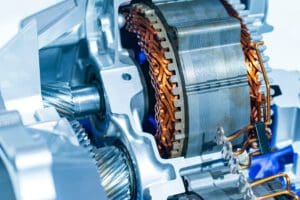
Machine Learning-Based E-Motor Thermal Metamodeling: Replacing FE Models for Fast System-Level EV Simulation

The Challenge with E-Motor Thermal Simulation Thermal simulation of electric motors sits at the intersection of two competing demands: the need for spatial accuracy at the component level, and the speed required for system-level scenario exploration. High‑fidelity 3D Finite Element (FE) thermal models of electric machines are essential for predicting hotspot temperatures, validating cooling strategies, […]

Read More
Futuristic tanker transporting oil or liquefied gas on the high seas

Marine System Simulation for LNG Carriers: Improving Fuel Efficiency and Reducing Emissions

The maritime industry is navigating one of the most significant transitions in its history. As global trade continues to grow, vessel operators face increasing pressure to reduce fuel consumption, lower greenhouse gas emissions, and comply with evolving environmental regulations. The International Maritime Organization (IMO) has established ambitious decarbonization targets, pushing ship owners and operators to […]

Read More
Blue Hydrogen filled H2 Aeroplane flying in the sky - future H2 energy concept.||Battery pack temperature at 60°C charging|Li-plating potential at 60°C|Li-plating potential output at 25°C|Li-plating potential output at -10°C|||Figure 5: SEI and Li-plating formation|Monitor signals for relevant battery pack states|Constant-current charging strategy example|Problems (left column) and solutions (right column) for BMS design|Operational window of a lithium-ion battery|Challenges Addressed||||||GT-SUITE & GT-Autolion model for engineering

Modeling Hydrogen Fuel Cell Propulsion Systems for Aviation with GT-SUITE

The aviation industry is entering a period of rapid transformation as manufacturers explore new propulsion technologies to meet increasingly ambitious emissions targets. While improvements in conventional engines and sustainable aviation fuels remain important pathways, hydrogen-powered propulsion is emerging as a potential long-term solution for cleaner flights. Among the hydrogen pathways being explored, fuel cell–based propulsion […]

Read More
Aerial view of a large data center powered by solar power.|Tilt-Rotor Animation|VTOL|Simulation Result Summary Table|Simulation Results|Flight Mission Profile|Series Hybrid Tilt-Rotor Model Example in GT-SUITE|System Workflow of a Series Hybrid Tilt-Rotor in GT-SUITE_01|fuel cell bus|IceFraction Animation||Schematic of water recirculation|Ice fraction near cathode catalyst layer|Comparison of steady and transient model response|2D flowfield in CAD

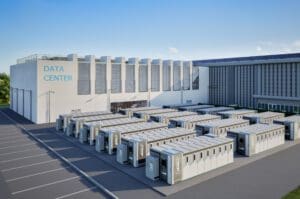
What Powers a Data Center? Understanding the Power Systems

In January 2023, a major Microsoft outage disrupted millions of users worldwide. People could not access Teams, Outlook, or other cloud services for hours. This event showed how quickly a small power interruption can ripple across the globe. Imagine if a cloud provider faces even a few minutes of downtime. Banking systems, hospitals, and AI-driven […]

Read More
|GT SUITE and SUMO traffic simulation|Co-simulation GT SUITE SUMO vs SUMO|co simulation GT-SUITE and SUMO EV example|co simulation GT-SUITE|simulate driving in traffic|NASA hydrogen rocket simulation|||

Gamma Technologies and GT-SUITE: Pioneering the Future of Simulation

Unveiling the Power of GT-SUITE This year, Gamma Technologies celebrated a significant milestone: its 30th anniversary. Since its inception in 1994, Gamma Technologies has been at the forefront of engineering simulation, revolutionizing how industries approach design and innovation. At the heart of this transformation is GT-SUITE, the company’s flagship systems simulation software that has become […]

Read More