







Category: electric vehicles

Soldier overseeing military drone while data streams in the background|Mapping of predicted anode potential|Virtual sensor estimating lithium plating|Virtual sensor estimating lithium plating risk in real time

Simulating Lithium–Sulfur Batteries for UAV Missions with GT-AutoLionSulfur

As industries push for lighter and more energy-efficient solutions, lithium–sulfur (Li–S) batteries are gaining increasing attention. Their appeal is clear: they offer the potential for much higher energy per weight than conventional lithium-ion batteries while using sulfur, an abundant and low-cost material. But while the promise is real, so are the challenges. Unlike lithium-ion batteries, […]


Read More
Electric Car EV charging station people charging in car port

Lithium Plating Detection: How Virtual Sensors Enable Smarter Fast Charging

Fast Charging Pushes Li-ion Batteries Toward a Hidden Risk Fast charging has become a defining requirement for modern electric vehicles and battery-powered systems. Users expect shorter charging times, consistent performance, and reliable operation under all conditions. For simulation, battery control, and engineering teams, this shift raises a shared challenge: predicting and managing internal battery risk […]

Read More
GT IS BLOG|Mild hybrid system model in GT-SUITE|||New pickup trucks on assembly line

When Agents Build the Model: Accelerating Digital Twins with GT Intelligence Studio

Why Building a Digital Twin Model Still Takes Too Long Our three-part series on physics-based digital twins followed a solar-charged, battery-powered Internet of Things (IoT) monitoring device. We covered the availability and battery-health questions that matter for operating it, how GT-SUITE and GT-AutoLion capture its physics and aging behavior, and how the model runs in […]

Read More
electric system of eco car engine Automotive part concept|Futuristic tanker transporting oil or liquefied gas on the high seas

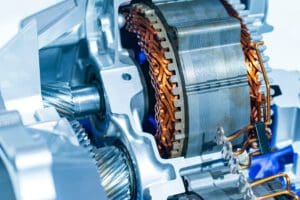
Machine Learning-Based E-Motor Thermal Metamodeling: Replacing FE Models for Fast System-Level EV Simulation

The Challenge with E-Motor Thermal Simulation Thermal simulation of electric motors sits at the intersection of two competing demands: the need for spatial accuracy at the component level, and the speed required for system-level scenario exploration. High‑fidelity 3D Finite Element (FE) thermal models of electric machines are essential for predicting hotspot temperatures, validating cooling strategies, […]

Read More
||Digital Twin Results in Live Analysis Dashboard|GT-Cloud for Digital Twin Execution|Daily SOH estimation for device leveraging GT-Play|GT-Autilion Digital Twin Models hosted on GT-Play|Digital Twin Cloud Setup|An innovative smart sensor box mounted on a sleek metal pole in a modern urban park

Virtual Validation of Lithium-Ion Battery Management Systems

Battery Management Systems (BMSs) play a critical role in ensuring lithium-ion battery packs operate safely, efficiently, and reliably across all operating conditions. As battery systems become more complex and application demands continue to increase, validating BMS algorithms has become significantly more challenging. Building on the previous blog’s overview of BMS architecture for lithium-ion batteries (LIBs), […]

Read More
Machine Deep learning algorithms

Combining Physics and Machine Learning to Predict Battery Aging with Confidence

Battery technology is evolving rapidly to meet the growing demands of electric vehicles, large-scale energy storage systems, and portable electronics. A major challenge lies in reliably predicting long-term battery performance within practical development timelines. Because batteries degrade gradually during both use and storage, conventional testing methods take a long time to produce accurate lifetime estimates. […]

Read More
Engineering Insights Blog|BMS|BMS|Tilt-Rotor Animation|Operational Window|VTOL|Simulation Result Summary Table|Flight Mission Profile|Simulation Results|Series Hybrid Tilt-Rotor Model Example in GT-SUITE|Comparison of steady and transient model response|IceFraction Animation|fuel cell bus|Schematic of water recirculation|System Workflow of a Series Hybrid Tilt-Rotor in GT-SUITE_01||Ice fraction near cathode catalyst layer||Routes Selected for System Level Simulation|2D flowfield in CAD

A Year of Engineering Insights: Our Top 7 Blogs You Shouldn’t Miss

From smarter thermal systems and next-generation batteries to digital twins, fuel cells, and advanced air mobility, we explored how engineering simulation is reshaping engineering decisions across industries. If you’re working at the intersection of innovation, performance, and efficiency, these seven blogs capture the most impactful ideas we shared in 2025, each addressing real-world engineering challenges […]

Read More
Cutaway view of a Solid-State Battery module on black background. Next Generation Electric Vehicle Battery concept. Generic design. Isometric view. 3D rendering illustration.|fuel cell bus|IceFraction Animation|Schematic of water recirculation|Ice fraction near cathode catalyst layer|Comparison of steady and transient model response|2D flowfield in CAD

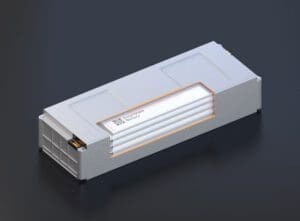
Solid-State Batteries: Why Virtual Modeling and Simulation are the Only Way Forward

Solid-State vs Lithium-Ion Batteries | What’s Driving the Shift The push for safer, longer-lasting, and higher-energy batteries is accelerating change across the energy storage industry. Solid-state batteries (SSB) are gaining attention as a promising solution to meet these growing demands. Unlike conventional lithium-ion batteries (LIB), which use flammable liquid electrolytes, SSB relies on solid materials, […]

Read More