

Tag: digital twin

||||||GT-SUITE & GT-Autolion model for engineering

Part 3 — Integrating Physics‑Based Digital Twins into an IoT and Cloud Environments

Part 1 introduced the operational challenges associated with battery-powered IoT monitoring devices. Part 2 described how GT‑SUITE and GT‑AutoLion models capture the system physics and battery aging mechanisms. This final part explains how these models integrate into an IoT and cloud architecture, allowing each digital twin to operate as an automated, scalable component of the […]

Read More
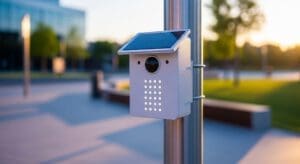
|An innovative smart sensor box mounted on a sleek metal pole in a modern urban park

Part 2 — Modeling Physical Digital Twins: Battery Behavior and Aging with GT‑SUITE and GT‑AutoLion

In Part 1, we explored why solar-charged, battery-powered IoT monitoring devices require reliable prediction of availability, SOH, and RUL, and why telemetry, statistical methods, or machine learning alone are not sufficient. In this second part, we focus on the modeling foundation: how GT‑SUITE and GT‑AutoLion provide the physics‑based structure that allows each digital twin to […]

Read More
An innovative smart sensor box mounted on a sleek metal pole in a modern urban park

Part 1 — Exploring the Power of Physics-Based Digital Twins

From asset monitoring stations in remote locations to industrial sensors tracking equipment health, many modern systems rely on small, self-powered IoT devices operating far from human reach. These devices are typically equipped with a solar panel, a battery, and a communication module. Their job is simple: collect data, stay powered, and reliably transmit information to […]

Read More
furnace

Modeling the Google Deschutes CDU in GT-SUITE: A Blueprint for Liquid Cooling Success

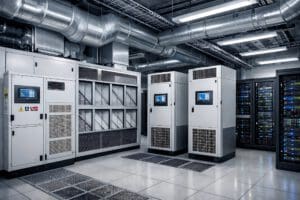
A Difficult Balance for Data Centers As data centers push toward higher rack power densities and rapidly scaling AI workloads, liquid cooling has become essential for managing extreme thermal loads efficiently. Designing these next generation cooling systems is challenging – engineers must balance reliability, energy use, water consumption, and safety, all while navigating tight deployment […]

Read More
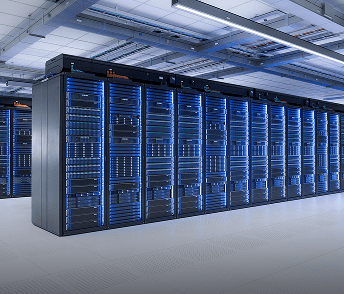
Server room with cloud on ceiling modern technology data center concept|Futuristic wireless Smart BMS powered by AI

Transforming Data Center Cooling: From Physics-Based Simulation to AI-Powered Control

Data centers face an unprecedented thermal challenge that demands revolutionary approaches to cooling system design and control. As computational demands surge with AI workloads and high-performance computing applications, heat generation has increased dramatically with some next-generation systems producing heat fluxes many times higher than traditional data centers. This exponential growth in thermal loads is pushing […]

Read More
Digital Twin Simulation|Toshiba GT-AutoLion blog||Toshiba GT-SUITE blog|Table: Results of preliminary study on battery sizing for the tugboat application. Daily fuel consumption as a function of battery configuration.||Figure 8. Simulation results of a single mission comparing two different battery designs. The Toshiba 20 Ah SCiBTM cells are arranged in 250S/170P (light grey) and 250S/142P (black).|||||||||||||Digital Twin Image|Digital Twin Orchestration Workflow|Cabin Comfort Model in GT-TAITherm|Data collection|Data cleaning|Virtual model building|Data driven ML model|Real time integration|Engineers interacting with a virtual digital twin model on a tablet||Fault Detection on OBD_02||Virtual Model using Digital Twin

Digital Twin Simulation: Engineering Smarter, Faster, and More Reliable Products

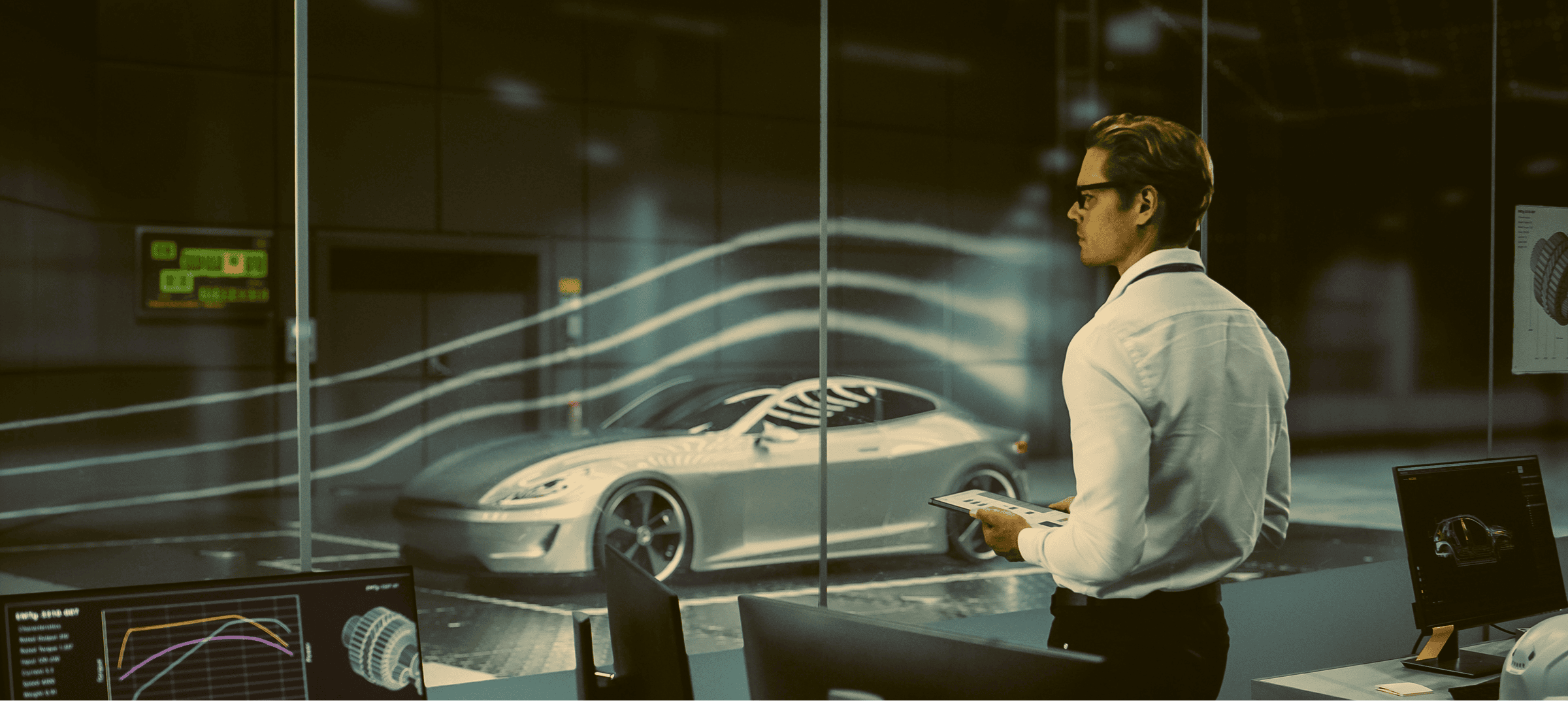
Why Digital Twins are Necessary and Important Imagine being able to predict equipment failures before they happen, optimize system performance in real time, and reduce expensive physical testing. This is the power of digital twins. A digital twin is a virtual replica of a physical asset, enabling real-time monitoring, simulation, and optimization.  With increasing system […]

Read More