






Resource Type: Blog

||||||||||

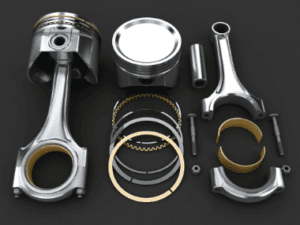
Piston Group Dynamics: An Approach for Friction Reduction Simulation

Stricter demands on emission norms, fuel economy and performance require internal combustion engines to be optimized with respect to their frictional losses and wear. Different investigations show that the piston group, consisting of piston skirt and rings, cylinder liner and conrod bearings, contributes a major part to the overall frictional losses. Although the ICE exists […]


Read More
|||||||||||||||||||||||||

Virtual Calibration of xEV Thermal Management Systems

Reducing the emission of the conventional vehicles by means of electrification of the powertrain brings new trends and new challenges for automotive engineers, especially in the field of thermal management and thermal component security. Thermal management systems for xEVs show a high degree of topological complexity, integration of new functions, more interaction between the different […]

Read More
battery thermal runaway simulation||||||

Simulating Battery Thermal Runaway Propagation with GT-SUITE

Learn how to use a model to evaluate battery pack safety during thermal runaway events Designers of battery packs are tasked with a very challenging problem: to package a set of cells as tightly as possible and minimize the amount of non-cell weight in the battery while maintaining proper temperature levels of cells, protecting against […]

Read More
||||

Predicting Lithium-ion Cell Swelling, Strain, and Stress using GT-AutoLion Simulation

Lithium-ion batteries (LIBs), used in most commercial electronics and portable devices, occupy a highly privileged position in the energy storage sector and have emerged as a versatile and efficient option for the electrification of automotive transportation and integration of renewable energies. The global market for LIB technology is projected to be over $90 billion by […]

Read More
electric engine simulation|||||||

How to Optimize Electric Vehicle (EV) Drivetrains in Less Than 1 Day Using Simulation

Improving Hybrid Electric Vehicle Controls: The recent proliferation of hybrid electric vehicles has greatly complicated the world of vehicle controls engineers. Multiple energy sources and propulsion systems applied to sophisticated hybrid drivetrains necessitate a much more intricate controls strategy than conventionally powered vehicles. Determining when to distribute power to the engine, motor(s), or both is […]

Read More
hybrid electric vehicle simulation||||||

How to Optimize Hybrid Vehicle Design using Simulation

As emissions regulations tighten and an electrified future grows more and more imminent, automotive engineers have been tasked with applying decades of traditional vehicle engineering knowledge to increasingly complex xEV architectures. The good news is that automakers have become very proficient at building conventionally powered vehicles – so much so that they still comprise the […]

Read More
|||||||

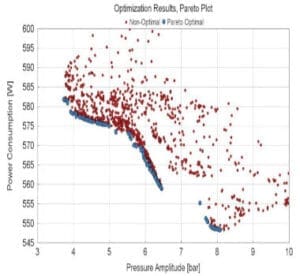
Exploring and Improving the GT-SUITE Genetic Algorithm

Mathematical optimization is the search for optimal model input parameters (factors) to minimize or maximize one or more of its predicted outputs (responses).  Optimization is a powerful tool to the modeler for two main tasks, both of which can enhance the modeler’s understanding of the relationship between factors and responses, and therefore the model in […]

Read More
||||||

Using Simulation to Evaluate Microgrid Design

Learn how to use a model to evaluate energy usage and cost of a microgrid. According to the United States’ Environmental Protection Agency, the generation of electricity accounts for over a quarter of the greenhouse gas emissions in the United States and is the second leading source of such gases, behind only transportation.  It is […]

Read More