







Category: ICE

Engineering Insights Blog|BMS|BMS|Tilt-Rotor Animation|Operational Window|VTOL|Simulation Result Summary Table|Flight Mission Profile|Simulation Results|Series Hybrid Tilt-Rotor Model Example in GT-SUITE|Comparison of steady and transient model response|IceFraction Animation|fuel cell bus|Schematic of water recirculation|System Workflow of a Series Hybrid Tilt-Rotor in GT-SUITE_01||Ice fraction near cathode catalyst layer||Routes Selected for System Level Simulation|2D flowfield in CAD

A Year of Engineering Insights: Our Top 7 Blogs You Shouldn’t Miss

From smarter thermal systems and next-generation batteries to digital twins, fuel cells, and advanced air mobility, we explored how engineering simulation is reshaping engineering decisions across industries. If you’re working at the intersection of innovation, performance, and efficiency, these seven blogs capture the most impactful ideas we shared in 2025, each addressing real-world engineering challenges […]

Read More
Virtual Calibration|BMS|BMS|Operational Window|Tilt-Rotor Animation|VTOL|Simulation Result Summary Table|Flight Mission Profile|Simulation Results|Series Hybrid Tilt-Rotor Model Example in GT-SUITE|IceFraction Animation|System Workflow of a Series Hybrid Tilt-Rotor in GT-SUITE_01|Comparison of steady and transient model response||fuel cell bus|Schematic of water recirculation|Ice fraction near cathode catalyst layer||Routes Selected for System Level Simulation|2D flowfield in CAD

Introduction to Virtual Calibration: A Smarter Approach to Powertrain Development

The Limitations of Conventional Calibration and Testing Testing and calibrating powertrains is crucial for product development yet traditionally requires years of work and millions in investment. Over time, requirements have expanded considerably to address regulatory compliance (OBD/emissions), customer expectations (efficiency), and manufacturer standards (reliability). Meeting these demands involves extensive physical testing through in-house facilities, on-road […]

Read More
VTOL|Cutaway view of a Solid-State Battery module on black background. Next Generation Electric Vehicle Battery concept. Generic design. Isometric view. 3D rendering illustration.|Performance calibration of a 2 Ah solid-state pouch cell at 303 K and 1C rate|Key differences between conventional LIB and SSB|Schematic view of conventional lithium-ion vs. solid-state batteries||||Experimental validation of GT-AutoLion Na-ion battery model at different C-rates||Schematic view of Na-ion battery|Voltage vs. capacity for power-dense and energy-dense Li-Ion cells at different temperatures and C-rates|Multi-scale Modeling with Compular Labs and Gamma Technologies|Transport properties as a function of salt concentration|Schematic representation of the MD simulations|P2D model used in the GT-AutoLion tool|Molecular Dynamic Simulation|Digital Twin Simulation|Virtual Model using Digital Twin||Fault Detection on OBD_02|Engineers interacting with a virtual digital twin model on a tablet|Data cleaning||Data driven ML model|Real time integration|||Virtual model building|Digital Twin Image|Data collection||Cabin Comfort Model in GT-TAITherm|Digital Twin Orchestration Workflow|||||||Table: Results of preliminary study on battery sizing for the tugboat application. Daily fuel consumption as a function of battery configuration.||Figure 8. Simulation results of a single mission comparing two different battery designs. The Toshiba 20 Ah SCiBTM cells are arranged in 250S/170P (light grey) and 250S/142P (black).|||||Toshiba GT-SUITE blog|Toshiba GT-AutoLion blog||RDE AUTOMATION GIF|Unwrapped view of the RDE

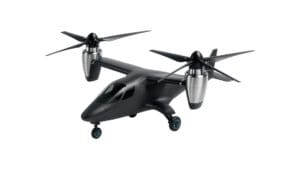
Simulating Series Hybrid Tilt-Rotor Aircraft in GT-SUITE

The rise in demand for electric and hybrid-electric aircraft, particularly in the Urban Air Mobility (UAM) sector, has fueled innovation in aircraft powertrain design. One promising configuration is the series hybrid tilt-rotor system, which combines the power and efficiency of hybrid-electric propulsion with the versatile flight dynamics of tilt-rotor technology. In this blog, we’ll dive […]

Read More
epa tailpipe rule|system simulation

How Will Electric and Hybrid Vehicle Development Be Impacted by the Softening of US Rules

Governmental Regulations Impacting Automotive OEMs In recent news, new vehicle tailpipe governmental regulations in the United States have softened for original equipment manufacturers (OEMs) development of electric vehicles (EVs) and hybrids (HEVs).  The Department of Energy has significantly slowed the phase-out of existing rules that give automakers extra fuel-economy credit for electric and hybrid vehicles […]

Read More
top 10 gt suite blogs 2023|top 10 blogs gamma technologies

Top 10 Gamma Technologies Blogs of 2023!

From calculating EV range to heat pump design, there is a blog for every simulation!  As we kick off 2024, let’s look back at the best blogs of 2023! Since the inception of Gamma Technologies, GT-SUITE has optimized system simulation solutions for manufacturers! In no order, these are the top 10 blogs written in 2023 that […]

Read More
top 10 blogs gamma technologies

Top 10 Gamma Technologies Blogs of 2022!

From battery thermal runaway to fleet route optimization, there is a blog for every simulation!  Since the inception of GT-SUITE, Gamma Technologies has offered state-of-the-art simulation solutions for manufacturers. Our simulation solutions help guide customers and partners toward highly optimized products.   In no order, these are the top 10 blogs of 2022!   Simulating Your Way […]

Read More
vehicle thermal management simulation|||||||

How Simulation Is Used To Design ICE vs. Battery Electric Vehicle Thermal Management Systems

Understanding Vehicle Thermal Management  Vehicle electrification across the transportation industry is being driven by demands for reducing emissions and increasing fuel economy. However, engineering these electrified vehicles comes with a new set of challenges for thermal management of the powertrain and cabin. In this blog I will discuss some of these new challenges for battery […]

Read More
Gasoline car and electric car simulation|||||||||||

Vehicle Modeling and Simulation: ICEV & BEV Correlation Procedure

Vehicle Level Simulation is a rapidly expanding technique which most OEMs are exploring to help reduce testing cost and time. To be effective, these simulations must accurately represent the vehicle being simulated. This can be achieved in two steps, first by collecting the data required for modeling and feeding it into a simulation tool to […]

Read More
hydrogen combustion simulation||Figure 2 Ar-H2 Closed Cycle Engine Model Configuration in GT-SUITE|||||

Using Simulation to Model Closed-Cycle Argon Hydrogen Engines

Evaluating Renewable Hydrogen Fuel With the increasing demands for fuel-efficient and low-to zero-emissions technologies in the automotive industry, renewable hydrogen fuel is regarded as a promising energy storage form for vehicles. Pure hydrogen combustion emits no greenhouse gas CO2, and noble gases can eliminate environmental pollutants such as NOx by replacing nitrogen. As a result, […]

Read More