






Category: GT-FEMAG

VTOL|Cutaway view of a Solid-State Battery module on black background. Next Generation Electric Vehicle Battery concept. Generic design. Isometric view. 3D rendering illustration.|Performance calibration of a 2 Ah solid-state pouch cell at 303 K and 1C rate|Key differences between conventional LIB and SSB|Schematic view of conventional lithium-ion vs. solid-state batteries||||Experimental validation of GT-AutoLion Na-ion battery model at different C-rates||Schematic view of Na-ion battery|Voltage vs. capacity for power-dense and energy-dense Li-Ion cells at different temperatures and C-rates|Multi-scale Modeling with Compular Labs and Gamma Technologies|Transport properties as a function of salt concentration|Schematic representation of the MD simulations|P2D model used in the GT-AutoLion tool|Molecular Dynamic Simulation|Digital Twin Simulation|Virtual Model using Digital Twin||Fault Detection on OBD_02|Engineers interacting with a virtual digital twin model on a tablet|Data cleaning||Data driven ML model|Real time integration|||Virtual model building|Digital Twin Image|Data collection||Cabin Comfort Model in GT-TAITherm|Digital Twin Orchestration Workflow|||||||Table: Results of preliminary study on battery sizing for the tugboat application. Daily fuel consumption as a function of battery configuration.||Figure 8. Simulation results of a single mission comparing two different battery designs. The Toshiba 20 Ah SCiBTM cells are arranged in 250S/170P (light grey) and 250S/142P (black).|||||Toshiba GT-SUITE blog|Toshiba GT-AutoLion blog||RDE AUTOMATION GIF|Unwrapped view of the RDE

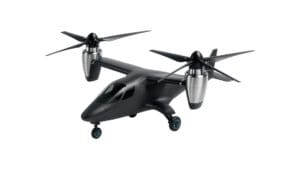
Simulating Series Hybrid Tilt-Rotor Aircraft in GT-SUITE

The rise in demand for electric and hybrid-electric aircraft, particularly in the Urban Air Mobility (UAM) sector, has fueled innovation in aircraft powertrain design. One promising configuration is the series hybrid tilt-rotor system, which combines the power and efficiency of hybrid-electric propulsion with the versatile flight dynamics of tilt-rotor technology. In this blog, we’ll dive […]


Read More
|GT SUITE and SUMO traffic simulation|Co-simulation GT SUITE SUMO vs SUMO|co simulation GT-SUITE and SUMO EV example|co simulation GT-SUITE|simulate driving in traffic|NASA hydrogen rocket simulation|||

Gamma Technologies and GT-SUITE: Pioneering the Future of Simulation

Unveiling the Power of GT-SUITE This year, Gamma Technologies celebrated a significant milestone: its 30th anniversary. Since its inception in 1994, Gamma Technologies has been at the forefront of engineering simulation, revolutionizing how industries approach design and innovation. At the heart of this transformation is GT-SUITE, the company’s flagship systems simulation software that has become […]

Read More
epa tailpipe rule|system simulation

How Will Electric and Hybrid Vehicle Development Be Impacted by the Softening of US Rules

Governmental Regulations Impacting Automotive OEMs In recent news, new vehicle tailpipe governmental regulations in the United States have softened for original equipment manufacturers (OEMs) development of electric vehicles (EVs) and hybrids (HEVs).  The Department of Energy has significantly slowed the phase-out of existing rules that give automakers extra fuel-economy credit for electric and hybrid vehicles […]

Read More
top 10 gt suite blogs 2023|top 10 blogs gamma technologies

Top 10 Gamma Technologies Blogs of 2023!

From calculating EV range to heat pump design, there is a blog for every simulation!  As we kick off 2024, let’s look back at the best blogs of 2023! Since the inception of Gamma Technologies, GT-SUITE has optimized system simulation solutions for manufacturers! In no order, these are the top 10 blogs written in 2023 that […]

Read More
Designing electric motors with multi physics simulation|A complete electric motor system model using GT-SUITE and GT-FEMAG|electric motor warmup simulation||FEMAG and GT-SUITE|Automatic model order reduction in GT-SUITE to reduce thermal finite element models to thermal network models|

Designing Thermally Secured Electric Motors with Simulation

Component-Level Design & Analysis for Motor Thermal Security Most of today’s traction motors in battery electric vehicles (BEVs) are permanent magnet synchronous machines (PMSMs) that use interior permanent magnet (IPM) rotors with rare-earth magnets embedded in the rotor (automotive companies are starting to explore or even build other technologies, but that is a topic for […]

Read More